Recomienda este artículo a tus amigos:
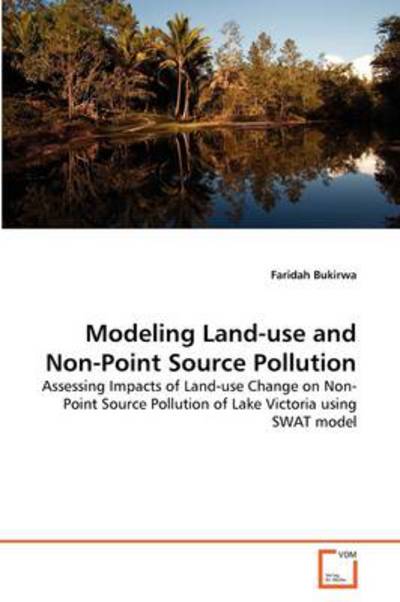
Modeling Land-use and Non-point Source Pollution: Assessing Impacts of Land-use Change on Non-point Source Pollution of Lake Victoria Using Swat Model Faridah Bukirwa
Pedido desde almacén remoto
Nuestros clientes opinan:


Modeling Land-use and Non-point Source Pollution: Assessing Impacts of Land-use Change on Non-point Source Pollution of Lake Victoria Using Swat Model
Faridah Bukirwa
Pollutant loading in Lake Victoria is resulting from a wide range of human activities. Most attention has however been drawn to the pollution caused by point- sources like industries and sewerage works. Other land-based activities which are generally referred to as non-point sources of pollution have not received adequate attention. This book identified major sources of NPS pollution in the Simiyu catchment of Lake Victoria and using land-uses of 1975 and 2006 compared the relative impact of land-use change on nutrient load (P and N) into the Lake. Possible BMP were also identified for those sub-basins with the highest pollution yield. Remote sensing was used to identify and charaterize the land-use and the Soil and Water Assessment Tool was used to quantify sediment and nutrient load from these two different land-use scenarios. It was found- out that there was an expansion of agricultural land at an annual change rate of 2.9%. If pollution processes per sub-catchement could be understood, BMP could be deviced depending on the sub-basin which would have a big collective reduction in NPS pollution in the whole catchment.
| Medios de comunicación | Libros Paperback Book (Libro con tapa blanda y lomo encolado) |
| Publicado | 2 de agosto de 2011 |
| ISBN13 | 9783639371062 |
| Editores | VDM Verlag Dr. Müller |
| Páginas | 92 |
| Dimensiones | 150 × 6 × 226 mm · 145 g |
| Lengua | Inglés |


![Cover for Beate Pottmann-knapp · Tiergestützte (Psycho)therapie: Wissen Für Diagnostik, Behandlung, Therapie, Prävention, Salutogenese, Resilienz, Förderung, Entwicklung, Begleitung (Paperback Book) [German edition] (2013)](https://imusic.b-cdn.net/images/item/original/369/9783639409369.jpg?beate-pottmann-knapp-2013-tiergestutzte-psycho-therapie-wissen-fur-diagnostik-behandlung-therapie-pravention-salutogenese-resilienz-forderung-entwicklung-begleitung-paperback-book&class=scaled&v=1416425000)