
Recomienda este artículo a tus amigos:
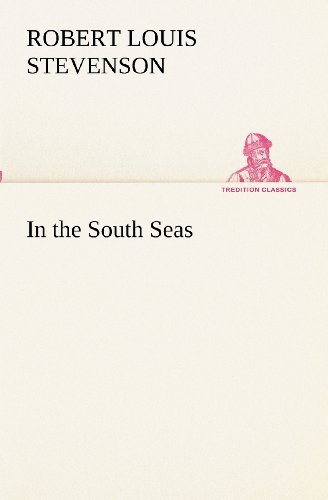
In the South Seas Robert Louis Stevenson
Nuestros clientes opinan:


También disponible como:
- Paperback Book (2016) $ 14,99
- Paperback Book (2014) $ 14,99
- Paperback Book (2015) $ 15,49
- Paperback Book (2017) $ 15,49
- Paperback Book (2009) $ 17,49
- Paperback Book (2015) $ 18,99
- Paperback Book (2012) $ 19,99
- Paperback Book (2017) $ 20,49
- Paperback Book (2013) $ 21,99
- Paperback Book (2018) $ 21,99
- Paperback Book (2011) $ 21,99
- Paperback Book (2004) $ 23,49
- Paperback Book (2012) $ 24,49
- Hardcover Book (2012) $ 24,49
- Paperback Book (1998) $ 24,99
- Paperback Book (2020) $ 24,99
- Paperback Book (2015) $ 24,99
- Paperback Book (1901) $ 25,49
- Paperback Book (2015) $ 25,49
- Paperback Book (2017) $ 29,49
- Paperback Book (2025) $ 29,49
- Book (2022) $ 31,99
- Hardcover Book (2020) $ 33,99
- Paperback Book (2004) $ 37,99
- Hardcover Book (1901) $ 42,99
In the South Seas
Robert Louis Stevenson
The impediment of tongues was one that I particularly over-estimated. The languages of Polynesiaare easy to smatter, though hard to speak with elegance. And they are extremely similar, so that aperson who has a tincture of one or two may risk, not without hope, an attempt upon the others. And again, not only is Polynesian easy to smatter, but interpreters abound. Missionaries, traders, and broken white folk living on the bounty of the natives, are to be found in almost every isle andhamlet; and even where these are unserviceable, the natives themselves have often scraped up a littleEnglish, and in the French zone (though far less commonly) a little French-English, or an efficientpidgin, what is called to the westward 'Beach-la-Mar, ' comes easy to the Polynesian; it is now taught, besides, in the schools of Hawaii; and from the multiplicity of British ships, and the nearness of theStates on the one hand and the colonies on the other, it may be called, and will almost certainlybecome, the tongue of the Pacific. I will instance a few examples. I met in Majuro a Marshall Islandboy who spoke excellent English; this he had learned in the German firm in Jaluit, yet did not speakone word of German. I heard from a gendarme who had taught school in Rapa-iti that while thechildren had the utmost difficulty or reluctance to learn French, they picked up English on thewayside, and as if by accident. On one of the most out-of-the-way atolls in the Carolines, my friendMr. Benjamin Hird was amazed to find the lads playing cricket on the beach and talking English; andit was in English that the crew of the Janet Nicoll, a set of black boys from different Melanesianislands, communicated with other natives throughout the cruise, transmitted orders, and sometimesjested together on the fore-hatch. But what struck me perhaps most of all was a word I heard onthe verandah of the Tribunal at Noumea. A case had just been heard-a trial for infanticide againstan ape-like native woman; and the audience were smoking cigarettes as they awaited the verdict. Ananxious, amiable French lady, not far from tears, was eager for acquittal, and declared she wouldengage the prisoner to be her children's nurse. The bystanders exclaimed at the proposal; thewoman was a savage, said they, and spoke no language. 'Mais, vous savez, ' objected the fairsentimentalist; 'ils apprennent si vite l'angla
| Medios de comunicación | Libros Paperback Book (Libro con tapa blanda y lomo encolado) |
| Publicado | 16 de febrero de 2021 |
| ISBN13 | 9798709673571 |
| Editores | Independently Published |
| Páginas | 176 |
| Dimensiones | 152 × 229 × 10 mm · 267 g |
| Lengua | Inglés |
Mas por Robert Louis Stevenson
Mostrar todo


![Cover for Robert Louis Stevenson · Treasure Island - Word Cloud Classics (Paperback Book) [2nd edition] (2025)](https://imusic.b-cdn.net/images/item/original/746/9781667209746.jpg?robert-louis-stevenson-2025-treasure-island-word-cloud-classics-paperback-book&class=scaled&v=1734360263)


![Cover for Robert Louis Stevenson · 2 Feet Klassikere: Fruen af havet (Paperback Book) [1.º edición] (2025)](https://imusic.b-cdn.net/images/item/original/122/9788779947122.jpg?robert-louis-stevenson-2025-2-feet-klassikere-fruen-af-havet-paperback-book&class=scaled&v=1736183831)


![Cover for Robert Louis Stevenson · Score-Raising Classics: Dr. Jekyll and Mr. Hyde, Fourth Edition - Barron's Score-Raising Classics (Paperback Book) [Fourth edition] (2024)](https://imusic.b-cdn.net/images/item/original/159/9781506296159.jpg?robert-louis-stevenson-2024-score-raising-classics-dr-jekyll-and-mr-hyde-fourth-edition-barron-s-score-raising-classics-paperback-book&class=scaled&v=1715063963)


Más de esta serie



Ver todo de Robert Louis Stevenson ( Ej. Paperback Book , Hardcover Book , Book , CD y Audiolibro (CD) )