
Recomienda este artículo a tus amigos:
The Pink Fairy Book Andrew Lang
Nuestros clientes opinan:


También disponible como:
- Paperback Book (2015) $ 15,49
- Paperback Book (2015) $ 15,99
- Paperback Book (2017) $ 15,99
- Paperback Book (2018) $ 16,99
- Paperback Book (2018) $ 17,49
- Book (2020) $ 17,99
- Paperback Book (2017) $ 17,99
- Paperback Book (2017) $ 18,49
- Paperback Book (2018) $ 18,99
- Paperback Book (2023) $ 19,99
- Paperback Book (2018) $ 20,49
- Paperback Book (2009) $ 21,99
- Paperback Book (2008) $ 22,49
- Paperback Book (2011) $ 22,99
- Paperback Book (2018) $ 23,49
- Paperback Book (2020) $ 24,99
- Paperback Book (2013) $ 25,49
- Paperback Book (2021) $ 26,49
- Paperback Book (2008) $ 30,99
- Paperback Book (2009) $ 33,49
- Hardcover Book (2020) $ 38,49
- Hardcover Book (2013) $ 38,49
- Paperback Book (2010) $ 38,49
The Pink Fairy Book
Andrew Lang
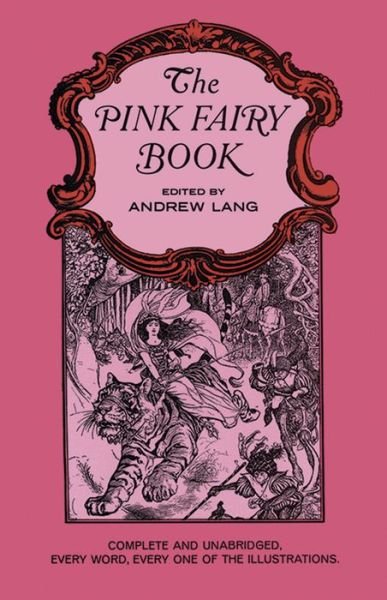
All people in the world tell nursery tales to their children. The Japanese tell them, the Chinese, theRed Indians by their camp fires, the Eskimo in their dark dirty winter huts. The Kaffirs of SouthAfrica tell them, and the modern Greeks, just as the old Egyptians did, when Moses had not beenmany years rescued out of the bulrushes. The Germans, French, Spanish, Italians, Danes, Highlanders tell them also, and the stories are apt to be like each other everywhere. A child who hasread the Blue and Red and Yellow Fairy Books will find some old friends with new faces in the PinkFairy Book, if he examines and compares. But the Japanese tales will probably be new to the youngstudent; the Tanuki is a creature whose acquaintance he may not have made before. He may remarkthat Andersen wants to 'point a moral, ' as well as to 'adorn a tale; ' that he is trying to make fun ofthe follies of mankind, as they exist in civilised countries. The Danish story of 'The Princess in theChest' need not be read to a very nervous child, as it rather borders on a ghost story. It has beenaltered, and is really much more horrid in the language of the Danes, who, as history tells us, werenot a nervous or timid people. I am quite sure that this story is not true. The other Danish andSwedish stories are not alarming. They are translated by Mr. W. A. Craigie. Those from the Sicilian(through the German) are translated, like the African tales (through the French) and the Catalantales, and the Japanese stories (the latter through the German), and an old French story, by Mrs. Lang. Miss Alma Alleyne did the stories from Andersen, out of the German. Mr. Ford, as usual, hasdrawn the monsters and mermaids, the princes and giants, and the beautiful princesses, who, theEditor thinks, are, if possible, prettier than ever. Here, then, are fancies brought from all quarters: we see that black, white, and yellow peoples are fond of just the same kinds of adventures. Courage, youth, beauty, kindness, have many trials, but they always win the battle; while witches, giants, unfriendly cruel people, are on the losing hand. So it ought to be, and so, on the whole, it is and willbe; and that is all the moral of fairy tales. We cannot all be young, alas! and pretty, and strong; butnothing prevents us from being kind, and no kind man, woman, or beast or bird, ever comes toanything but good in these oldest fables of the world. So far all the tales are true, and no fur
| Medios de comunicación | Libros Paperback Book (Libro con tapa blanda y lomo encolado) |
| Publicado | 13 de enero de 2021 |
| ISBN13 | 9798593918949 |
| Páginas | 180 |
| Dimensiones | 216 × 280 × 10 mm · 430 g |
| Lengua | Inglés |
Mas por Andrew Lang
Mostrar todo


![Cover for Andrew Lang · History of English Literature from Beowulf to Swinburne (Paperback Book) [2nd edition] (2025)](https://imusic.b-cdn.net/images/item/original/292/9780809532292.jpg?andrew-lang-2025-history-of-english-literature-from-beowulf-to-swinburne-paperback-book&class=scaled&v=1416844540)














Más de esta serie


Ver todo de Andrew Lang ( Ej. Paperback Book , Hardcover Book , Book , CD y Audiolibro (CD) )