
Recomienda este artículo a tus amigos:
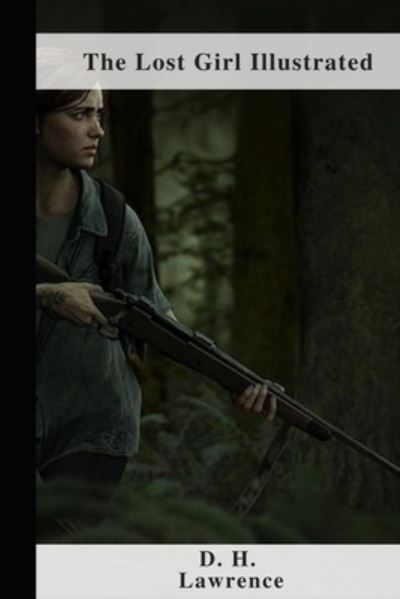
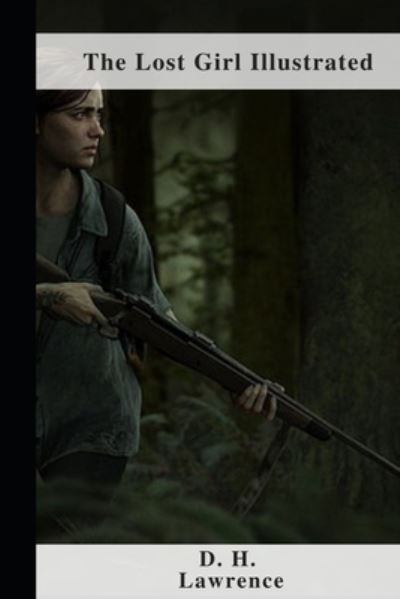
The Lost Girl D H Lawrence
Nuestros clientes opinan:


También disponible como:
- Paperback Book (2015) $ 15,49
- Paperback Book (2017) $ 17,49
-
Paperback BookOriginal edition(2016) $ 18,49
- Paperback Book (2020) $ 19,49
- Paperback Book (2016) $ 19,49
- Paperback Book (2016) $ 19,99
- Paperback Book (2017) $ 19,99
- Paperback Book (2014) $ 21,99
- Paperback Book (2014) $ 21,99
- Paperback Book (2015) $ 22,99
- Paperback Book (2012) $ 23,49
- Paperback Book (2017) $ 24,49
- Paperback Book (2012) $ 24,49
- Paperback Book (2015) $ 26,49
- Paperback Book (2022) $ 27,49
- Paperback Book (2017) $ 27,99
- Paperback Book (2017) $ 29,49
- Paperback Book (2023) $ 34,49
- Paperback Book (2015) $ 34,99
The Lost Girl
D H Lawrence
Take a mining townlet like Woodhouse, with a population of ten thousand people, andthree generations behind it. This space of three generations argues a certain wellestablished society. The old "County" has fled from the sight of so much disembowelledcoal, to flourish on mineral rights in regions still idyllic. Remains one great and inaccessiblemagnate, the local coal owner: three generations old, and clambering on the bottom step ofthe "County," kicking off the mass below. Rule him out. A well established society in Woodhouse, full of fine shades, ranging from the dark ofcoal-dust to grit of stone-mason and sawdust of timber-merchant, through the lustre of lardand butter and meat, to the perfume of the chemist and the disinfectant of the doctor, on tothe serene gold-tarnish of bank-managers, cashiers for the firm, clergymen and such-like, as far as the automobile refulgence of the general-manager of all the collieries. Here the neplus ultra. The general manager lives in the shrubberied seclusion of the so-called Manor. The genuine Hall, abandoned by the "County," has been taken over as offices by the firm. Here we are then: a vast substratum of colliers; a thick sprinkling of tradespeopleintermingled with small employers of labour and diversified by elementary schoolmastersand nonconformist clergy; a higher layer of bank-managers, rich millers and well-to-doironmasters, episcopal clergy and the managers of collieries, then the rich and sticky cherryof the local coal-owner glistening over all. Such the complicated social system of a small industrial town in the Midlands of England, in this year of grace 1920. But let us go back a little. Such it was in the last calm year ofplenty, 1913. A calm year of plenty. But one chronic and dreary malady: that of the odd women. Why, in the name of all prosperity, should every class but the lowest in such a society hangoverburdened with Dead Sea fruit of odd women, unmarried, unmarriageable women, called old maids? Why is it that every tradesman, every school-master, every bankmanager, and every clergyman produces one, two, three or more old maids? Do the middleclasses, particularly the lower middle-classes, give birth to more girls than boys? Or do thelower middle-class men assiduously climb up or down, in marriage, thus leaving their truepartners stranded? Or are middle-class women very squeamish in their choice ofhusbands?However it be, it is a tragedy. Or perhaps it is
| Medios de comunicación | Libros Paperback Book (Libro con tapa blanda y lomo encolado) |
| Publicado | 8 de diciembre de 2020 |
| ISBN13 | 9798578034473 |
| Páginas | 324 |
| Dimensiones | 216 × 280 × 17 mm · 752 g |
| Lengua | Inglés |
Mas por D H Lawrence
Mostrar todo


![Cover for D H Lawrence · Lady Chatterley's Lover (Paperback Book) [The Unexpurgated edition] (2024)](https://imusic.b-cdn.net/images/item/original/083/9798880907083.jpg?d-h-lawrence-2024-lady-chatterley-s-lover-paperback-book&class=scaled&v=1721198063)
![Cover for D H Lawrence · Studies in Classic American Literature (Paperback Book) [Warbler Classics Annotated edition] (2023)](https://imusic.b-cdn.net/images/item/original/857/9781959891857.jpg?d-h-lawrence-2023-studies-in-classic-american-literature-paperback-book&class=scaled&v=1698756170)






Más de esta serie
![Cover for D H Lawrence · The Lost Girl (1920) A NOVEL by D. H. Lawrence (Paperback Book) [Original edition] (2016)](https://imusic.b-cdn.net/images/item/original/995/9781533461995.jpg?d-h-lawrence-2016-the-lost-girl-1920-a-novel-by-d-h-lawrence-paperback-book&class=scaled&v=1640653468)
Ver todo de D H Lawrence ( Ej. Paperback Book , Hardcover Book , CD , Book y CD MP3 )