Recomienda este artículo a tus amigos:
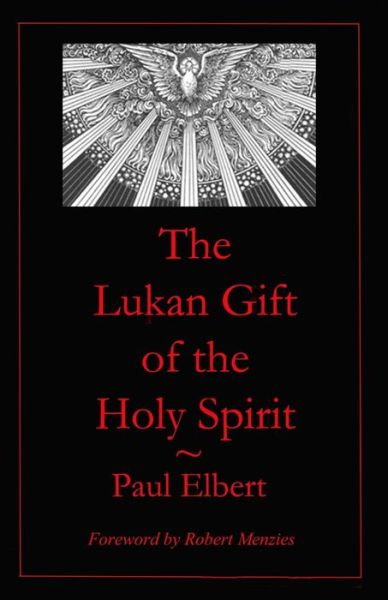
The Lukan Gift of the Holy Spirit: Understanding Luke's Expectations for Theophilus Paul Elbert
Pedido desde almacén remoto
Nuestros clientes opinan:


The Lukan Gift of the Holy Spirit: Understanding Luke's Expectations for Theophilus
Paul Elbert
From the Foreword: . . . Jesus's encouragement of his disciples to pray for the Holy Spirit in Luke 11:13, the climax of Peter's sermon in Acts 2:38, and the account of the Ephesian disciples' reception of the Spirit in Acts 18:23-19:7 are key passages that take us to the heart of Luke's pneumatology. How students of the Bible read these important texts will not only shape how they understand the work of the Spirit in Luke-Acts, but will largely determine their response to the Pentecostal movement. . . . This volume analyzes in context and at length each of these important passages from Luke-Acts. While this monograph is notable because of its subject matter, it is also marked by excellent scholarship. The book is filled with helpful exegetical insights, enhanced by an astonishing command of and interaction with the scholarly literature, and characterized by sensitivity to Luke's literary skill. . . .
This work is significant because, as the chapter titles indicate, it analyzes three critically important texts in context. Actually, the term "context" here can be understood in three ways. First, the author carefully interprets each of these passages within the larger literary context of Luke-Acts. So, Elbert argues that Luke writes to encourage Theophilus by setting out "a coherent pneumatological picture" for him, affirming that if Theophilus "prays for the gift of the Holy Spirit as Jesus taught, then it will be given" to him." Elbert demonstrates that we must read Jesus's exhortation to pray for the Spirit in light of the Pentecostal event and promise (Acts 2:38) and Luke's successive descriptions of its fulfilment, including the decisive story of the Ephesian disciples' reception of the Spirit (Acts 19:1-7). As Luke's narrative indicates, this gift of the Spirit will include "prophetic-type phenomena" and "make [Theophilus] a more effective witness" for Jesus.
Second, the author analyzes these key texts in the light of the first-century context of Graeco-Roman rhetorical conventions. Elbert shows how Luke frequently reflects his Hellenistic setting and upbringing by utilizing literary techniques common in the Graeco-Roman world of his day. So, for example, Elbert helpfully points out how Luke's description of Apollos (Acts 18:24-28), juxtaposed as it is with his account of Paul's ministry in Ephesus (Acts 19:1-7), follows a "comparison and contrast" literary strategy common among Hellenistic authors of this period.
Finally, by highlighting Luke's desire to strengthen and encourage Theophilus, an exemplar of Luke's audience, Elbert encourages contemporary readers to apply Luke's message to our context. So, just as "the phenomenological categories of prophecy, glossolalia, dreams, visions, and physically defying transcendent signs" might seem as strange to us as they were to Theophilus, hopefully we, like Theophilus, will also read this record with the knowledge that Luke is a reliable and trustworthy guide. Above all, Elbert calls us to recognize that Luke, a Spirit-inspired and authoritative guide, urges us to desire and expect the power of the Spirit to transform and enhance our participation in God's great mission.
166 pages
| Medios de comunicación | Libros Paperback Book (Libro con tapa blanda y lomo encolado) |
| Publicado | 28 de agosto de 2021 |
| ISBN13 | 9798502689434 |
| Páginas | 166 |
| Dimensiones | 140 × 216 × 10 mm · 199 g |
| Lengua | Inglés |


![Cover for Paul Elbert · Journal of Biblical and Pneumatological Research: Volume One, 2009 - Journal of Biblical and Pneumatological Research (Paperback Book) [2009, Fall edition] (2009)](https://imusic.b-cdn.net/images/item/original/323/9781606089323.jpg?paul-elbert-2009-journal-of-biblical-and-pneumatological-research-volume-one-2009-journal-of-biblical-and-pneumatological-research-paperback-book&class=scaled&v=1411758542)


