Recomienda este artículo a tus amigos:
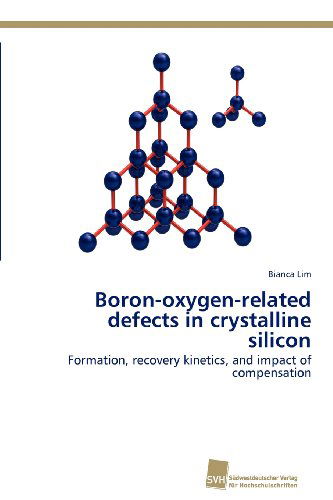
Boron-oxygen-related Defects in Crystalline Silicon: Formation, Recovery Kinetics, and Impact of Compensation Bianca Lim German edition
Pedido desde almacén remoto
Nuestros clientes opinan:


Boron-oxygen-related Defects in Crystalline Silicon: Formation, Recovery Kinetics, and Impact of Compensation
Bianca Lim
Solar cells based on crystalline silicon have already achieved efficiencies greater than 24%. In current production, however, the performance of the vast majority of crystalline silicon solar cells is well below that. The reasons for this disparity are manifold. Poor material quality is one important aspect. Material quality can be reduced by crystallographic defects and undesired impurities. In monocrystalline Czochralski silicon an important impurity is oxygen. While on its own harmless, in combination with boron, a common dopant in silicon solar cells, it is known to lead to a critical light-induced degradation of the material quality and with it cell efficiency. This phenomenon has been extensively studied in recent years and yet the true nature of the defect responsible for the degradation effect has proved to be elusive. In this work, the formation, recovery kinetics as well as the composition of these boron-oxygen-related defects was investigated in compensated silicon. This allowed for a separate investigation of the effects of boron concentration and the doping concentration not possible before. In addition, with regard to the new results, a new defect model was developed.
| Medios de comunicación | Libros Paperback Book (Libro con tapa blanda y lomo encolado) |
| Publicado | 25 de abril de 2012 |
| ISBN13 | 9783838133072 |
| Editores | Südwestdeutscher Verlag für Hochschulsch |
| Páginas | 128 |
| Dimensiones | 150 × 8 × 226 mm · 209 g |
| Lengua | Alemán |