Recomienda este artículo a tus amigos:
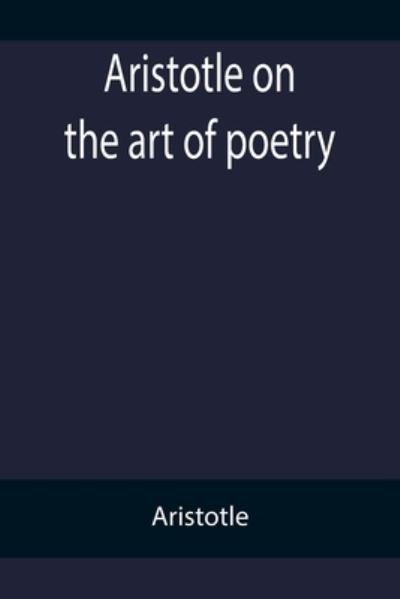
The Poetics Aristotle
Pedido desde almacén remoto
Nuestros clientes opinan:


También disponible como:
The Poetics
Aristotle
Aristotle's Poetics (Greek: Per? poiitik?s; Latin: De Poetica;[1] c. 335 BC[2]) is the earliest surviving work of dramatic theory and first extant philosophical treatise to focus on literary theory.[3] In it, Aristotle offers an account of what he calls "poetry" (a term that derives from a classical Greek term, poiitis, that means "poet; author; maker" and in this context includes verse drama - comedy, tragedy, and the satyr play - as well as lyric poetry and epic poetry). They are similar in the fact that they are all imitations but different in the three ways that Aristotle describes:
Differences in music rhythm, harmony, meter and melody.
Difference of goodness in the characters.
Difference in how the narrative is presented: telling a story or acting it out.
In examining its "first principles", Aristotle finds two: 1) imitation and 2) genres and other concepts by which that of truth is applied/revealed in the poesis. His analysis of tragedy constitutes the core of the discussion.[4] Although Aristotle's Poetics is universally acknowledged in the Western critical tradition, "almost every detail about his seminal work has aroused divergent opinions".[5] The work was lost to the Western world for a long time. It was available in the Middle Ages and early Renaissance only through a Latin translation of an Arabic version written by Averroes.
| Medios de comunicación | Libros Paperback Book (Libro con tapa blanda y lomo encolado) |
| Publicado | 1 de junio de 1902 |
| ISBN13 | 9781989708262 |
| Editores | Binker North |
| Páginas | 56 |
| Dimensiones | 152 × 229 × 3 mm · 86 g |
| Lengua | Inglés |


![Cover for Aristotle · The Physics. Writings on Natural Philosophy (Concise Edition) - Foundations (Paperback Book) [Concise edition] (2023)](https://imusic.b-cdn.net/images/item/original/668/9781804175668.jpg?aristotle-2023-the-physics-writings-on-natural-philosophy-concise-edition-foundations-paperback-book&class=scaled&v=1673953646)