Recomienda este artículo a tus amigos:
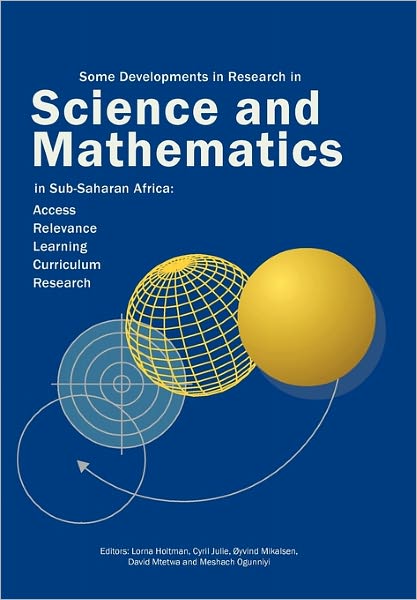
Some Developments in Research in Science and Mathematics in Sub-Saharan Africa: Access, Relevance, Learning, Curriculum Reseah Lorna Holtman
Pedido desde almacén remoto
Nuestros clientes opinan:


Some Developments in Research in Science and Mathematics in Sub-Saharan Africa: Access, Relevance, Learning, Curriculum Reseah
Lorna Holtman
Marc Notes: Includes bibliographical references.; Much attention in late-developing countries is given to providing access to studies which allow school leavers to enter science and technology-related careers. These programmes are driven by the belief that graduates will then substantially contribute to the developmental needs of their countries. But is providing access to institutions enough? Students in developing countries often come from school environments lacking in resources - human, physical and financial. This book, in a number of chapters, reviews research related to the crucial dimension of epistemological access to the disciplines of import, which students need as much as institutional access in order to improve their chances of success. A significant feature of this collection's research studies is that their empirical bases are highly localised, covering areas such as: research methods;access;curriculum, instruction and assessment;and the relevance of science and mathematics education in Zimbabwe, Uganda, Swaziland, South Africa, Namibia, Malawi, Ghana and Lesotho. This volume provides invaluable insights and will be of relevance to researchers, policy makers and lecturers interested in these research outcomes in Sub-Saharan Africa. It is the outcome of a doctoral research capacity-development project, the Graduate Studies in Science, Mathematics and Technology Education (GRASSMATE). Publisher Marketing: Much attention in late-developing countries is given to providing access to studies which allow school leavers to enter science and technology-related careers. These programmes are driven by the belief that graduates will then substantially contribute to the developmental needs of their countries. But is providing access to institutions enough? Students in developing countries often come from school environments lacking in resources - human, physical and financial. This book, in a number of chapters, reviews research related to the crucial dimension of epistemological access to the disciplines of import, which students need as much as institutional access in order to improve their chances of success. A significant feature of this collection's research studies is that their empirical bases are highly localised, covering areas such as: research methods; access; curriculum, instruction and assessment; and the relevance of science and mathematics education in Zimbabwe, Uganda, Swaziland, South Africa, Namibia, Malawi, Ghana and Lesotho. This volume provides invaluable insights and will be of relevance to researchers, policy makers and lecturers interested in these research outcomes in Sub-Saharan Africa. It is the outcome of a doctoral research capacity-development project, the Graduate Studies in Science, Mathematics and Technology Education (GRASSMATE).
| Medios de comunicación | Libros Paperback Book (Libro con tapa blanda y lomo encolado) |
| Publicado | 29 de diciembre de 2008 |
| Fecha de lanzamiento original | 2009 |
| ISBN13 | 9781920299293 |
| Editores | Compress |
| Páginas | 418 |
| Dimensiones | 170 × 244 × 21 mm · 662 g |
| Lengua | Inglés |
| Editor | Cyril, Julie |
| Editor | Holtman, Lorna |
| Editor | Mtetwa, David |


