
Recomienda este artículo a tus amigos:
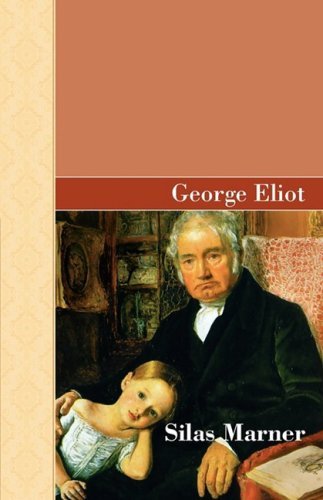
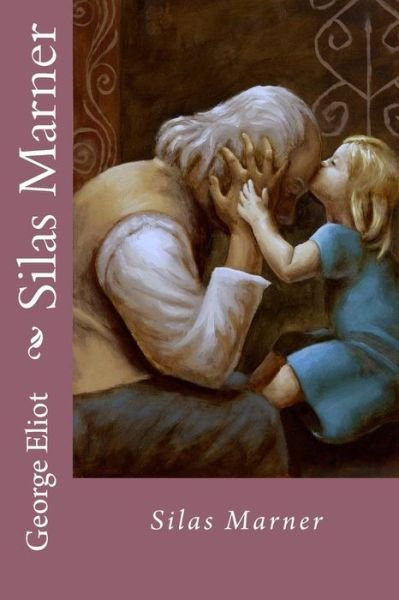
Silas Marner George Eliot
Nuestros clientes opinan:


También disponible como:
- Hardcover Book (2018) $ 10,49
- Paperback Book (2010) $ 10,99
-
Paperback BookBantam Classic edition(1981) $ 10,99
- Paperback Book (2012) $ 11,49
- Paperback Book (2003) $ 11,49
- Paperback Book (2023) $ 12,49
- Paperback Book (2014) $ 13,99
- Paperback Book (2018) $ 13,99
- Paperback Book (2016) $ 13,99
- Paperback Book (2017) $ 14,99
- Paperback Book (2015) $ 14,99
- Paperback Book (2011) $ 15,49
- Paperback Book (2016) $ 15,99
- Paperback Book (2014) $ 15,99
- Paperback Book (2015) $ 15,99
- Paperback Book (2017) $ 16,49
- Paperback Book (2020) $ 16,49
- Paperback Book (2012) $ 16,49
- Paperback Book (2017) $ 16,49
- Paperback Book (2017) $ 16,99
- Paperback Book (2016) $ 16,99
- Paperback Book (2017) $ 17,49
- Paperback Book (2016) $ 17,49
- Paperback Book (2017) $ 17,49
- Paperback Book (2013) $ 17,49
Silas Marner
George Eliot
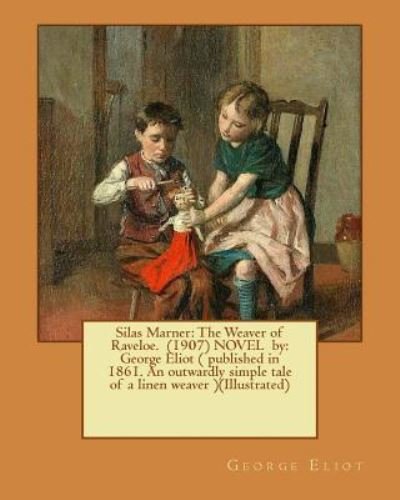
Hugh Thomson (1 June 1860 - 7 May 1920) was an Irish Illustrator born at Coleraine near Derry. He is best known for his pen-and-ink illustrations of works by authors such as Jane Austen, Charles Dickens, and J. M. Barrie.... Mary Anne Evans (22 November 1819 - 22 December 1880; alternatively Mary Ann or Marian), known by her pen name George Eliot, was an English novelist, poet, journalist, translator, and one of the leading writers of the Victorian era. She wrote seven novels, including Adam Bede (1859), The Mill on the Floss (1860), Silas Marner (1861), Romola (1862-63), Middlemarch (1871-72), and Daniel Deronda (1876), most of which are set in provincial England and known for their realism and psychological insight. Although female authors were published under their own names during her lifetime, she wanted to escape the stereotype of women's writing being limited to lighthearted romances. She also wanted to have her fiction judged separately from her already extensive and widely known work as an editor and critic. Another factor in her use of a pen name may have been a desire to shield her private life from public scrutiny, thus avoiding the scandal that would have arisen because of her relationship with the married George Henry Lewes. Eliot's Middlemarch has been described by the novelists Martin Amis and Julian Barnes as the greatest novel in the English language.... Silas Marner: The Weaver of Raveloe is the third novel by George Eliot, published in 1861. An outwardly simple tale of a linen weaver, it is notable for its strong realism and its sophisticated treatment of a variety of issues ranging from religion to industrialisation to community. Plot summaryThe novel is set in the early years of the 19th century. Silas Marner, a weaver, is a member of a small Calvinist congregation in Lantern Yard, a slum street in Northern England. He is falsely accused of stealing the congregation's funds while watching over the very ill deacon. Two clues are given against Silas: a pocket knife, and the discovery in his own house of the bag formerly containing the money. There is the strong suggestion that Silas' best friend, William Dane, has framed him, since Silas had lent his pocket knife to William shortly before the crime was committed. Lots are drawn in the belief - shared by Silas - that God will direct the process and establish the truth. However Silas is proclaimed guilty. The woman Silas was to marry breaks their engagement and instead marries William. With his life shattered, his trust in God lost and his heart broken, Silas leaves Lantern Yard and the city for a rural area where he is unknown. Marner travels south to the Midlands and settles near the rural village of Raveloe in Warwickshire, where he lives isolated and alone, choosing to have only minimal contact with the residents beyond his work as a linen weaver. He throws himself into his craft and comes to adore the gold coins he earns and hoards from his weaving. One foggy night, the two bags of gold are stolen by Dunstan ("Dunsey") Cass, a dissolute younger son of Squire Cass, the town's leading landowner. Silas then sinks into a deep gloom, despite the villagers' attempts to aid him. Dunsey immediately disappears, but little is made of this by the community because he had vanished several times before. Godfrey Cass, Dunsey's elder brother, also harbours a secret past. He is married to, but estranged from, Molly Farren, a laudanum-addicted working-class woman living in another town. This secret prevents Godfrey from marrying Nancy Lammeter, a young middle-class woman. On a winter's night, Molly tries to make her way to Squire Cass's New Year's Eve party with her two-year-old girl to announce that she is Godfrey's wife. On the way, she lies down in the snow and passes out. The child wanders away and into Silas' house. Silas follows her tracks in the snow and discovers the woman dead....
| Medios de comunicación | Libros Paperback Book (Libro con tapa blanda y lomo encolado) |
| Publicado | 11 de febrero de 2019 |
| ISBN13 | 9781796664249 |
| Editores | Independently Published |
| Páginas | 162 |
| Dimensiones | 203 × 254 × 9 mm · 335 g |
| Lengua | Inglés |
Mas por George Eliot
Mostrar todo![Cover for George Eliot · Middlemarch: a Study in Provincial Life (Paperback Book) [Complete One-volume edition] (2026)](https://imusic.b-cdn.net/images/item/original/091/9781479405091.jpg?george-eliot-2026-middlemarch-a-study-in-provincial-life-paperback-book&class=scaled&v=1466713812)





![Cover for George Eliot · Penguin Readers Level 4: The Mill on the Floss (ELT Graded Reader): Abridged Edition - Penguin Readers (Paperback Book) [Abridged edition] (2023)](https://imusic.b-cdn.net/images/item/original/045/9780241589045.jpg?george-eliot-2023-penguin-readers-level-4-the-mill-on-the-floss-elt-graded-reader-abridged-edition-penguin-readers-paperback-book&class=scaled&v=1662995784)





Más de esta serie

![Cover for George Eliot · Silas Marner (Collector's Edition) (Laminated Hardback with Jacket) (Hardcover Book) [Collector's edition] (2025)](https://imusic.b-cdn.net/images/item/original/669/9781998736669.jpg?george-eliot-2025-silas-marner-collector-s-edition-laminated-hardback-with-jacket-hardcover-book&class=scaled&v=1771257620)

![Cover for George Eliot · Silas Marner (Tredition Classics) (Spanish Edition) (Paperback Book) [Spanish edition] (2013)](https://imusic.b-cdn.net/images/item/original/712/9783849525712.jpg?george-eliot-2013-silas-marner-tredition-classics-spanish-edition-paperback-book&class=scaled&v=1416848978)
![Cover for George Eliot · Silas Marner - Cambridge Literature (Paperback Book) [New edition] (1995)](https://imusic.b-cdn.net/images/item/original/722/9780521485722.jpg?george-eliot-1995-silas-marner-cambridge-literature-paperback-book&class=scaled&v=1398424573)


![Cover for George Eliot · Silas Marner - Talking Classics (Audiolibro (CD)) [Abridged edition] (2016)](https://imusic.b-cdn.net/images/item/original/841/9781781961841.jpg?george-eliot-2016-silas-marner-talking-classics-audiolibro-cd-&class=scaled&v=1511497774)
![Cover for George Eliot · Silas Marner - Wordsworth Classics (Paperback Book) [New edition] (1994)](https://imusic.b-cdn.net/images/item/original/210/9781853262210.jpg?george-eliot-1994-silas-marner-wordsworth-classics-paperback-book&class=scaled&v=1393420351)


Ver todo de George Eliot ( Ej. Paperback Book , Hardcover Book , Book , CD y Audiolibro (CD) )