Recomienda este artículo a tus amigos:
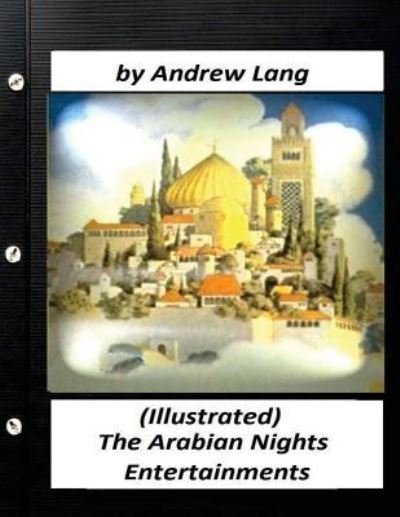
The Arabian Nights Andrew Lang
Pedido desde almacén remoto
Nuestros clientes opinan:


También disponible como:
- Paperback Book (2016) $ 14,49
- Paperback Book (2017) $ 14,99
- Paperback Book (2015) $ 15,99
- Paperback Book (2017) $ 18,49
- Paperback Book (2018) $ 18,49
- Paperback Book (2011) $ 19,49
- Paperback Book (2015) $ 19,99
- Paperback Book (2017) $ 19,99
- Paperback Book (2017) $ 19,99
- Paperback Book (2018) $ 19,99
- Paperback Book (2018) $ 20,49
- Paperback Book (2017) $ 20,49
- Paperback Book (2017) $ 20,49
- Paperback Book (2016) $ 20,99
- Paperback Book (2015) $ 20,99
- Paperback Book (2017) $ 21,49
- Paperback Book (2016) $ 21,99
- Paperback Book (2017) $ 22,49
- Paperback Book (2012) $ 22,49
- Paperback Book (2017) $ 22,49
- Hardcover Book (2017) $ 39,49
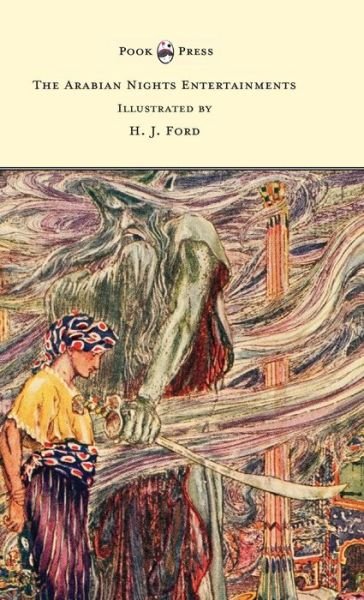
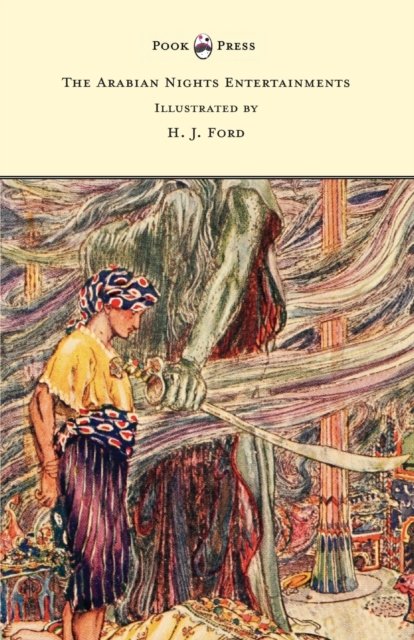
The Arabian Nights
Andrew Lang
One Thousand and One Nights is a collection of Middle Eastern and South Asian stories and folk tales compiled in Arabic during the Islamic Golden Age. It is often known in English as the Arabian Nights, from the first English language edition (1706), which rendered the title as The Arabian Nights' Entertainment The main frame story concerns Shahryar, whom the narrator calls a "Sasanian king" ruling in "India and China".[5] He is shocked to discover that his brother's wife is unfaithful; discovering his own wife's infidelity has been even more flagrant, he has her executed: but in his bitterness and grief decides that all women are the same. Shahryar begins to marry a succession of virgins only to execute each one the next morning, before she has a chance to dishonour him. Eventually the vizier, whose duty it is to provide them, cannot find any more virgins. Scheherazade, the vizier's daughter, offers herself as the next bride and her father reluctantly agrees. On the night of their marriage, Scheherazade begins to tell the king a tale, but does not end it. The king, curious about how the story ends, is thus forced to postpone her execution in order to hear the conclusion. The next night, as soon as she finishes the tale, she begins (and only begins) a new one, and the king, eager to hear the conclusion, postpones her execution once again. So it goes on for 1,001 nights. The tales vary widely: they include historical tales, love stories, tragedies, comedies, poems, burlesques and various forms of erotica. Numerous stories depict jinns, ghouls, apes, [6] sorcerers, magicians, and legendary places, which are often intermingled with real people and geography, not always rationally; common protagonists include the historical Abbasid caliph Harun al-Rashid, his Grand Vizier, Jafar al-Barmaki, and the famous poet Abu Nuwas, despite the fact that these figures lived some 200 years after the fall of the Sassanid Empire in which the frame tale of Scheherazade is set. Sometimes a character in Scheherazade's tale will begin telling other characters a story of his own, and that story may have another one told within it, resulting in a richly layered narrative texture
| Medios de comunicación | Libros Paperback Book (Libro con tapa blanda y lomo encolado) |
| Publicado | 26 de junio de 2016 |
| ISBN13 | 9781534912649 |
| Editores | Createspace Independent Publishing Platf |
| Páginas | 218 |
| Dimensiones | 203 × 254 × 12 mm · 439 g |
| Lengua | Inglés |





![Cover for Andrew Lang · History of English Literature from Beowulf to Swinburne (Paperback Book) [2nd edition] (2025)](https://imusic.b-cdn.net/images/item/original/292/9780809532292.jpg?andrew-lang-2025-history-of-english-literature-from-beowulf-to-swinburne-paperback-book&class=scaled&v=1416844540)