Recomienda este artículo a tus amigos:
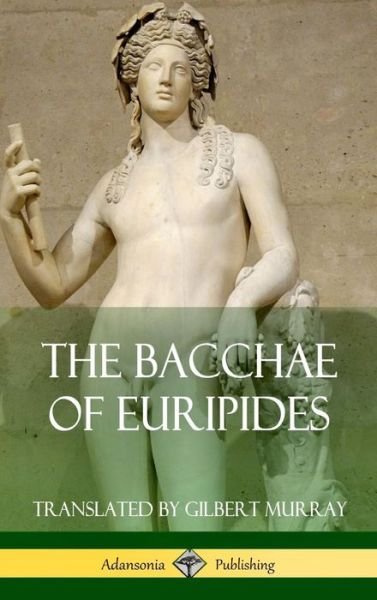
The Bacchae of Euripides
Pedido desde almacén remoto
Nuestros clientes opinan:


También disponible como:
The Bacchae of Euripides
Euripides
The Bacchae is an ancient Greek tragedy, written by the Athenian playwright Euripides during his final years in Macedonia, at the court of Archelaus I of Macedon. It premiered posthumously at the Theatre of Dionysus in 405 BC as part of a tetralogy that also included Iphigeneia at Aulis and Alcmaeon in Corinth, and which Euripides' son or nephew probably directed. It won first prize in the City Dionysia festival competition. The Bacchae is concerned with two opposite sides of man's natures: There is the rational and civilized side, which is represented by the character of Pentheus, the king of Thebes, and then there is the instinctive side, which is represented by Dionysus. This side is sensual without analysis, it feels a connection between man and beast, and it is a potential source of divinity and spiritual power. In Euripides' plays the gods represent various human qualities, allowing the audience to grapple with considerations of the human condition. The Bacchae seems to be saying that it is perilous to deny or ignore the human desire for Dionysian experience; those who are open to the experience will find spiritual power, and those who suppress or repress the desire in themselves or others will transform it into a destructive force.
| Medios de comunicación | Libros Paperback Book (Libro con tapa blanda y lomo encolado) |
| Publicado | 25 de marzo de 2016 |
| ISBN13 | 9781530749713 |
| Editores | Createspace Independent Publishing Platf |
| Páginas | 80 |
| Dimensiones | 152 × 229 × 5 mm · 127 g |
| Lengua | Inglés |


![Cover for Euripides · Bakkantinderne (Paperback Book) [1.º edición] (2026)](https://imusic.b-cdn.net/images/item/original/115/9788743070115.jpg?euripides-2026-bakkantinderne-paperback-book&class=scaled&v=1774380155)



![Cover for Euripides · Medea - NHB Classic Plays (Paperback Book) [National Theatre of Scotland version edition] (2022)](https://imusic.b-cdn.net/images/item/original/150/9781839041150.jpg?euripides-2022-medea-nhb-classic-plays-paperback-book&class=scaled&v=1657705908)