Recomienda este artículo a tus amigos:
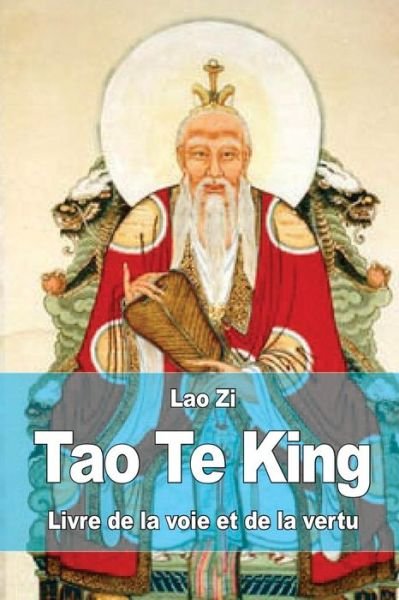
Tao Te King: Livre De La Voie et De La Vertu Lao Zi
Pedido desde almacén remoto
Nuestros clientes opinan:

Tao Te King: Livre De La Voie et De La Vertu
Lao Zi
Publisher Marketing: Tao Te King a eu une influence considerable en Extreme-Orient et en Occident a travers ses tres nombreuses interpretations et traductions. En 1988, on en recensait 250 versions en langues etrangeres. Il n'existe pas encore de conclusion definitive quant a sa signification reelle. Selon certains, ce serait un recueil d'aphorismes provenant de plusieurs auteurs ou on y trouve des propositions contradictoires. D'autres au contraire y voient un texte cachant une coherence profonde sous un style allusif et elliptique. En Chine, le texte a toujours ete accompagne d'un commentaire. Par l'interpretation qu'ils suggerent, ces commentaires ont contribue autant que le texte d'origine au sens de l'ouvrage et a sa place dans la philosophie et la religion." Contributor Bio: Zi, Lao Laozi (also romanized as Lao Tse, Lao Tu, Lao-Tsu, Laotze, Laosi, Laocius, and other variations) was a mystic philosopher of ancient China, best known as the author of the Tao Te Ching (often simply referred to as Laozi). His association with the Tao Te Ching has led him to be traditionally considered the founder of Taoism (pronounced as "Daoism"). He is also revered as a deity in most religious forms of Taoist philosophy, which often refers to Laozi as Taishang Laojun, or "One of the Three Pure Ones." Laozi is an honorific title. Lao means "venerable" or "old," such as modern Mandarin laoshi "teacher." Zi Wade-Giles transliteration tzu, in this context is typically translated "master." Zi was used in ancient China as an honorific suffix, indicating "Master," or "Sir." In popular biographies, Laozi's given name was Er, his surname was Li (forming Li Er) and his courtesy name was Boyang. Dan is a posthumous name given to Laozi, and he is sometimes referred to as Li Dan. According to Chinese traditions, Laozi lived in the 6th century BCE. Historians variously contend that Laozi is a synthesis of multiple historical figures, that he is a mythical figure, or that he actually lived in the 5th-4th century BCE, concurrent with the Hundred Schools of Thought and Warring States Period. A central figure in Chinese culture, both nobility and common people claim Laozi in their lineage. He was honored as an ancestor of the Tang imperial family, and was granted the title Taishang xuanyuan huangdi, meaning "Supreme Mysterious and Primordial Emperor." Xuanyuan and Huangdi are also, respectively, the personal and proper names of the Yellow Emperor. Throughout history, Laozi's work has been embraced by various anti-authoritarian movements.
| Medios de comunicación | Libros Paperback Book (Libro con tapa blanda y lomo encolado) |
| Publicado | 22 de agosto de 2015 |
| ISBN13 | 9781516997169 |
| Editores | Createspace |
| Páginas | 40 |
| Dimensiones | 152 × 229 × 2 mm · 68 g |
![Cover for Lao Zi · Le Livre De La Voie et De La Vertu, Compose Dans Le Vie Siecle Avant L'ere Chretienne. (Ed.1842) (French Edition) (Paperback Book) [French edition] (2022)](https://imusic.b-cdn.net/images/item/original/096/9782012569096.jpg?lao-zi-2022-le-livre-de-la-voie-et-de-la-vertu-compose-dans-le-vie-siecle-avant-l-ere-chretienne-ed-1842-french-edition-paperback-book&class=scaled&v=1408596809)

![Cover for Lao Zi · Le Livre De La Voie et De La Vertu: Compose Dans Le Vie Siecle Avant L'ere Chretienne (Ed.1842) (French Edition) (Paperback Book) [French edition] (2018)](https://imusic.b-cdn.net/images/item/original/089/9782012569089.jpg?lao-zi-2018-le-livre-de-la-voie-et-de-la-vertu-compose-dans-le-vie-siecle-avant-l-ere-chretienne-ed-1842-french-edition-paperback-book&class=scaled&v=1408595671)
![Cover for Lao Zi · Lao-tseu (Paperback Book) [French edition] (2018)](https://imusic.b-cdn.net/images/item/original/223/9782012828223.jpg?lao-zi-2018-lao-tseu-paperback-book&class=scaled&v=1409592784)
![Cover for Lao Zi · Le Tao De Laotseu (Ed.1894) (French Edition) (Paperback Book) [French edition] (2018)](https://imusic.b-cdn.net/images/item/original/594/9782012571594.jpg?lao-zi-2018-le-tao-de-laotseu-ed-1894-french-edition-paperback-book&class=scaled&v=1408603299)

![Cover for Lao Zi · Tao Te Ching: With Summaries of the Writings Attributed to Huai-Nan-Tzu, Kuan-Yin-Tzu and Tung-Ku-Ching (Paperback Book) [Revised Ed. edition] (1999)](https://imusic.b-cdn.net/images/item/original/230/9781578631230.jpg?lao-zi-1999-tao-te-ching-with-summaries-of-the-writings-attributed-to-huai-nan-tzu-kuan-yin-tzu-and-tung-ku-ching-paperback-book&class=scaled&v=1403272711)
![Cover for Lao zi · The Tao Te Ching (New Translation with Commentary) (Paperback Book) [New edition] (1998)](https://imusic.b-cdn.net/images/item/original/380/9781557782380.jpg?lao-zi-1998-the-tao-te-ching-new-translation-with-commentary-paperback-book&class=scaled&v=1458667909)
![Cover for Lao zi · Treatise on Response and Retribution (Paperback Book) [New edition] (1973)](https://imusic.b-cdn.net/images/item/original/446/9780875482446.jpg?lao-zi-1973-treatise-on-response-and-retribution-paperback-book&class=scaled&v=1408566802)