
Recomienda este artículo a tus amigos:
Moby Dick the Complete & Unabridged Original Classic Herman Melville


Moby Dick the Complete & Unabridged Original Classic
Herman Melville
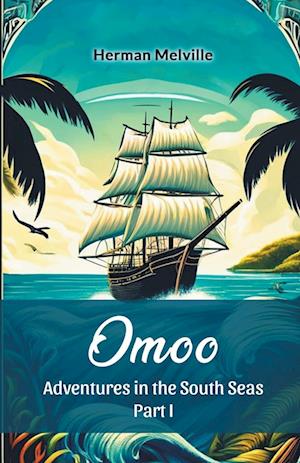
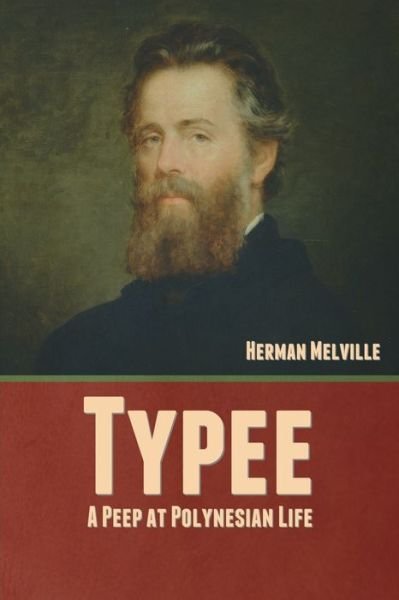
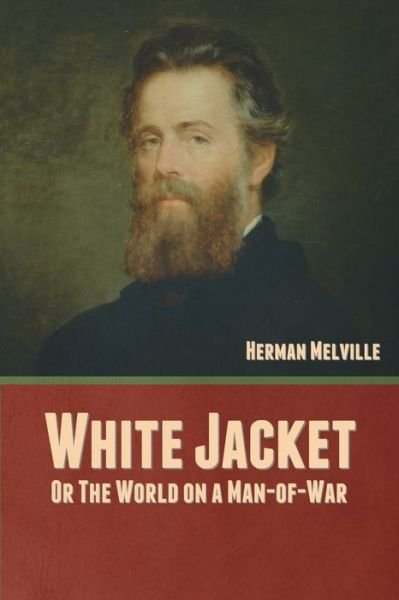
Publisher Marketing: This premium quality edition contains the complete and unabridged original classic version of "Moby Dick," printed on heavyweight, bright white paper in a large 7.44"x9.69" format, with a laminated cover featuring an original design. Also included is a detailed introductory essay discussing the life and work of Herman Melville and the history and significance of "Moby Dick," providing the modern reader with useful background information to enhance the enjoyment of this classic. Herman Melville is known today primarily for his iconic whaling novel, "Moby Dick" (1851), the story of the struggle between Captain Ahab and "the great white whale," which appears on many lists of "greatest books ever written" and is considered an essential part of the Western Canon. Ironically, when the novel was published it was a monumental flop and signaled the end of Melvilles's career as a novelist. One theory is that the omission of the epilogue from the first printing left the book open to ridicule as a first-person narrative in which the narrator did not survive to tell the tale. He published several more novels, all without success, and in 1866 became a New York customs inspector, all but forgotten for the next fifty years. It was not until the rise of the modernist movement that "Moby Dick" was recognized as a great literary work. What once were regarded as serious flaws came to be viewed as literary innovations, and the novel went from being criticized as undisciplined and poorly crafted to being hailed as "ahead of its time" and "visionary." For the modern reader, the complex analytical theories behind "Moby Dick" may get in the way of enjoying the novel for its own sake. Taking "Moby Dick" at face value, it is an interesting tale, rich with diverse characters and evocative themes like friendship, class and social status, good and evil, isolation and community, the existence of God, obsession and human perception. A vivid depiction of life aboard ship in the nineteenth century it is perhaps the most detailed and accessible existing picture of what was, for a time, the richest industry in the United States. If at times the text seems stilted or antiquated, as might be expected from any work from this era, it is equally true that at times the text attains a soaring, almost lyric tone. The most casual reader cannot fail to appreciate the unforgettable characters, compelling storyline and vivid depictions of whales, whalers and whaling, and the obsession-driven quest after the great white whale upon which Ahab leads, and the crew follows, to their doom. And this, without anything more, makes Moby Dick essential reading. Herman Melville (1819-1891) was an author of the American Renaissance, or Romantic, period. Born in New York City, he was the third child of a successful merchant. He worked as a schoolteacher before going to sea for the first time in 1839. Serving on a whaler in 1842, he jumped ship and spent a month living among South Pacific islanders. His first novel, "Typee" (1846), a bestseller, was based in part on his experiences in the South Pacific as was the successful sequel, "Omoo" (1847). The same year Melville, now a successful novelist, married Elizabeth Knapp Shaw. They would have four children between 1849 and 1855. "Mardi" and "Redburn," both published in 1849, met with limited success. "Mardi" in particular was criticized as so thematically dense as to be incomprehensible. "White-Jacket" (1850), based on Melville's brief service in the U. S. Navy, was his most influential work during his lifetime, with graphic descriptions of flogging that led directly to banning the practice on naval vessels. "Moby Dick" and several additional failed novels and poetry collections followed. Melville sank into obscurity and died in 1891, about 20 years before "Moby Dick" was recognized as a literary classic. Contributor Bio: Melville, Herman Herman Melville[a] (August 1, 1819 - September 28, 1891) was an American novelist, writer of short stories, and poet from the American Renaissance period. Most of his writings were published between 1846 and 1857. Best known for his sea adventure Typee (1846) and his whaling novel Moby-Dick (1851), he was almost forgotten during the last thirty years of his life. Melville's writing draws on his experience at sea as a common sailor, exploration of literature and philosophy, and engagement in the contradictions of American society in a period of rapid change. The main characteristic of his style is probably its heavy allusiveness, a reflection of his use of written sources. Melville's way of adapting what he read for his own new purposes, scholar Stanley T. Williams wrote, "was a transforming power comparable to Shakespeare's."
| Medios de comunicación | Libros Paperback Book (Libro con tapa blanda y lomo encolado) |
| Publicado | 12 de abril de 2015 |
| ISBN13 | 9781511611572 |
| Editores | Createspace |
| Páginas | 416 |
| Dimensiones | 189 × 246 × 22 mm · 739 g |
Mas por Herman Melville
Mostrar todo


![Cover for Herman Melville · Moby-Dick - Word Cloud Classics (Paperback Book) [2nd edition] (2025)](https://imusic.b-cdn.net/images/item/original/753/9781667209753.jpg?herman-melville-2025-moby-dick-word-cloud-classics-paperback-book&class=scaled&v=1734366211)









![Cover for Herman Melville · Moby-Dick - Oxford World's Classics (Paperback Book) [2 Revised edition] (2022)](https://imusic.b-cdn.net/images/item/original/695/9780198853695.jpg?herman-melville-2022-moby-dick-oxford-world-s-classics-paperback-book&class=scaled&v=1631692735)


Ver todo de Herman Melville ( Ej. Paperback Book , Hardcover Book , Book , CD y Sewn Spine Book )