
Recomienda este artículo a tus amigos:
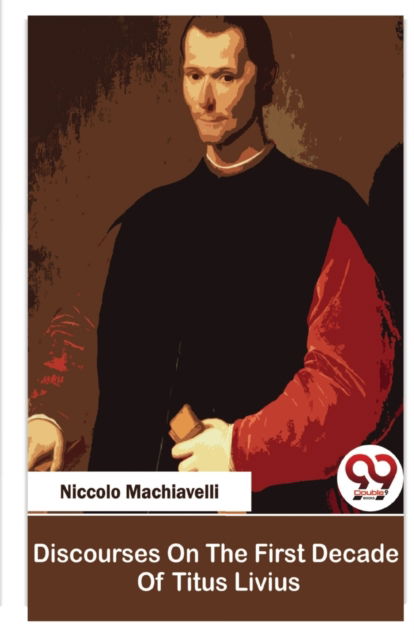
Discourses on Livy Niccolo Machiavelli
Nuestros clientes opinan:


También disponible como:
Discourses on Livy
Niccolo Machiavelli
Publisher Marketing: The Discourses on Livy is a work of political history and philosophy written in the early 16th century (ca. 1517) by the Italian writer and political theorist Niccolo Machiavelli, best known as the author of The Prince. The Discourses were published posthumously with papal privilege in 1531. The title identifies the work's subject as the first ten books of Livy's Ab urbe condita, which relate the expansion of Rome through the end of the Third Samnite War in 293 BCE, although Machiavelli discusses what can be learned from many other eras including contemporary politics. Machiavelli saw history in general as a way to learn useful lessons from the past for the present, and also as a type of analysis which could be built upon, as long as each generation did not forget the works of the past. Machiavelli frequently describes Romans and other ancient peoples as superior models for his contemporaries, but he also describes political greatness as something which comes and goes amongst peoples, in cycles. Niccolo di Bernardo dei Machiavelli was a Florentine historian, politician, diplomat, philosopher, humanist, and writer during the Renaissance. He was for many years an official in the Florentine Republic, with responsibilities in diplomatic and military affairs. He was a founder of modern political science, and more specifically political ethics. He also wrote comedies, carnival songs, and poetry. His personal correspondence is renowned in the Italian language. He was Secretary to the Second Chancery of the Republic of Florence from 1498 to 1512, when the Medici were out of power. He wrote his masterpiece, The Prince, after the Medici had recovered power and he no longer held a position of responsibility in Florence. His views on the importance of a strong ruler who was not afraid to be harsh with his subjects and enemies were most likely influenced by the Italian city-states, which due to a lack of unification were very vulnerable to other unified nation-states, such as France. "Machiavellianism" is a widely used negative term to characterize unscrupulous politicians of the sort Machiavelli described in The Prince. The book itself gained enormous notoriety and wide readership because the author seemed to be endorsing behavior often deemed as evil and immoral. Because of this, the term "Machiavellian" is often associated with deceit, deviousness, ambition, and brutality." Contributor Bio: Machiavelli, Niccolo Niccolo Machiavelli was an Italian politician, diplomat, founding father of political science, and author of the preeminent political treatise, The Prince. Born in Florence, Italy, Machiavelli held many government posts over his lifetime and often took leading roles in important diplomatic missions. During his time visiting other countries and nation states, Machiavelli was exposed to the politics of figures like Ceasare Borgia and King Louis XII, experiences which would inform his writings on state-building and politics. Machiavelli's political career came to an abrupt end when the Medici overthrew Florence, and he was held as a prisoner under the new regime. Tortured for a short time, he was released without admitting to any crime or treason. At this point, Machiavelli retired and turned to intellectual and philosophical pursuits, producing his two major works, The Prince and Discourses on the First Ten Books of Titus Livy. He died in 1527 at the age of 58.
| Medios de comunicación | Libros Paperback Book (Libro con tapa blanda y lomo encolado) |
| Publicado | 28 de enero de 2015 |
| ISBN13 | 9781507766989 |
| Editores | Createspace |
| Género | Chronological Period > Ancient (To 499 A.d.) |
| Páginas | 246 |
| Dimensiones | 178 × 254 × 13 mm · 430 g |
Mas por Niccolo Machiavelli
Mostrar todo






















Más de esta serie

Ver todo de Niccolo Machiavelli ( Ej. Paperback Book , Hardcover Book , Book , CD y Sewn Spine Book )