
Recomienda este artículo a tus amigos:
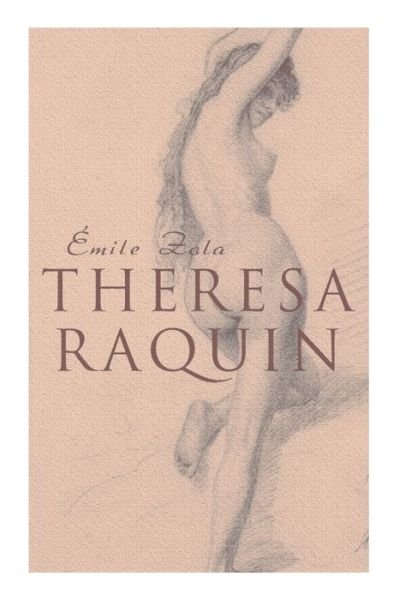
Theresa Raquin Emile Zola
Nuestros clientes opinan:


También disponible como:
Theresa Raquin
Emile Zola
Publisher Marketing: One Thursday, Camille, on returning from his office, brought with him a great fellow with square shoulders, whom he pushed in a familiar manner into the shop. "Mother," he said to Madame Raquin, pointing to the newcomer, "do you recognise this gentleman?" The old mercer looked at the strapping blade, seeking among her recollections and finding nothing, while Therese placidly observed the scene. "What!" resumed Camille, "you don't recognise Laurent, little Laurent, the son of daddy Laurent who owns those beautiful fields of corn out Jeufosse way. Don't you remember? I went to school with him; he came to fetch me of a morning on leaving the house of his uncle, who was our neighbour, and you used to give him slices of bread and jam." All at once Madame Raquin recollected little Laurent, whom she found very much grown. It was quite ten years since she had seen him. She now did her best to make him forget her lapse of memory in greeting him, by recalling a thousand little incidents of the past, and by adopting a wheedling manner towards him that was quite maternal. Laurent had seated himself. With a peaceful smile on his lips, he replied to the questions addressed to him in a clear voice, casting calm and easy glances around him. "Just imagine," said Camille, "this joker has been employed at the Orleans-Railway-Station for eighteen months, and it was only to-night that we met and recognised one another-the administration is so vast, so important!" As the young man made this remark, he opened his eyes wider, and pinched his lips, proud to be a humble wheel in such a large machine. Shaking his head, he continued: "Oh! but he is in a good position. He has studied. He already earns 1,500 francs a year. His father sent him to college. He had read for the bar, and learnt painting. That is so, is it not, Laurent? You'll dine with us?" "I am quite willing," boldly replied the other. He got rid of his hat and made himself comfortable in the shop, while Madame Raquin ran off to her stewpots. Therese, who had not yet pronounced a word, looked at the new arrival. She had never seen such a man before. Laurent, who was tall and robust, with a florid complexion, astonished her. It was with a feeling akin to admiration, that she contemplated his low forehead planted with coarse black hair, his full cheeks, his red lips, his regular features of sanguineous beauty. For an instant her eyes rested on his neck, a neck that was thick and short, fat and powerful. Then she became lost in the contemplation of his great hands which he kept spread out on his knees: the fingers were square; the clenched fist must be enormous and would fell an ox. Contributor Bio: Zola, Emile ?mile Zola was a French writer who is recognized as an exemplar of literary naturalism and for his contributions to the development of theatrical naturalism. Zola's best-known literary works include the twenty-volume Les Rougon-Macquart, an epic work that examined the influences of violence, alcohol and prostitution on French society through the experiences of two families, the Rougons and the Macquarts. Other remarkable works by Zola include Contes ? Ninon, Les Myst?res de Marseille, and Th?r?se Raquin. In addition to his literary contributions, Zola played a key role in the Dreyfus Affair of the late nineteenth and early twentieth century. His newspaper article J'Accuse accused the highest levels of the French military and government of obstruction of justice and anti-semitism, for which he was convicted of libel in 1898. After a brief period of exile in England, Zola returned to France where he died in 1902. ?mile Zola is buried in the Panth?on alongside other esteemed literary figures Victor Hugo and Alexandre Dumas. Contributor Bio: Ukray, Murat William Shakespeare (564 - 1616) was an English poet, playwright, and actor, widely regarded as the greatest writer in the English language and the world's pre-eminent dramatist. He is often called England's national poet and the "Bard of Avon." His extant works, including some collaborations, consist of about 38 plays, 154 sonnets, two long narrative poems, and a few other verses, of which the authorship of some is uncertain. His plays have been translated into every major living language and are performed more often than those of any other playwright. Shakespeare was born and brought up in Stratford-upon-Avon. At the age of 18, he married Anne Hathaway, with whom he had three children: Susanna, and twins Hamnet and Judith. Between 1585 and 1592, he began a successful career in London as an actor, writer, and part-owner of a playing company called the Lord Chamberlain's Men, later known as the King's Men. He appears to have retired to Stratford around 1613 at age 49, where he died three years later. Few records of Shakespeare's private life survive, and there has been considerable speculation about such matters as his physical appearance, sexuality, religious beliefs, and whether the works attributed to him were written by others. Shakespeare produced most of his known work between 1589 and 1613. His early plays were mainly comedies and histories and these works remain regarded as some of the best work produced in these genres. He then wrote mainly tragedies until about 1608, including Hamlet, Othello, King Lear, and Macbeth, considered some of the finest works in the English language. In his last phase, he wrote tragicomedies, also known as romances, and collaborated with other playwrights. Many of his plays were published in editions of varying quality and accuracy during his lifetime. In 1623, John Heminges and Henry Condell, two friends and fellow actors of Shakespeare, published the First Folio, a collected edition of his dramatic works that included all but two of the plays now recognised as Shakespeare's. It was prefaced with a poem by Ben Jonson, in which Shakespeare is hailed, presciently, as "not of an age, but for all time." His plays remain highly popular today and are constantly studied, performed, and reinterpreted in diverse cultural and political contexts throughout the world.
| Medios de comunicación | Libros Paperback Book (Libro con tapa blanda y lomo encolado) |
| Publicado | 30 de octubre de 2014 |
| ISBN13 | 9781503042858 |
| Editores | Createspace |
| Género | Cultural Region > French |
| Páginas | 260 |
| Dimensiones | 152 × 229 × 15 mm · 385 g |
Mas por Emile Zola
Mostrar todo










![Cover for Emile Zola · The Joy of Life [La joie de vivre] (Edition2023) (Paperback Book) (2024)](https://imusic.b-cdn.net/images/item/original/652/9789362764652.jpg?emile-zola-2024-the-joy-of-life-la-joie-de-vivre-edition2023-paperback-book&class=scaled&v=1747706772)





![Cover for Emile Zola · Work [Travail] Book II (Paperback Book) (2024)](https://imusic.b-cdn.net/images/item/original/177/9789369073177.jpg?emile-zola-2024-work-travail-book-ii-paperback-book&class=scaled&v=1751276600)

![Cover for Emile Zola · Work [Travail] Book I (Paperback Book) (2024)](https://imusic.b-cdn.net/images/item/original/909/9789369070909.jpg?emile-zola-2024-work-travail-book-i-paperback-book&class=scaled&v=1751276601)

![Cover for Emile Zola · Work [Travail] Book III (Paperback Book) (2024)](https://imusic.b-cdn.net/images/item/original/984/9789369077984.jpg?emile-zola-2024-work-travail-book-iii-paperback-book&class=scaled&v=1751276600)





Más de esta serie
Ver todo de Emile Zola ( Ej. Paperback Book , Hardcover Book , Book , CD y Sewn Spine Book )