
Recomienda este artículo a tus amigos:
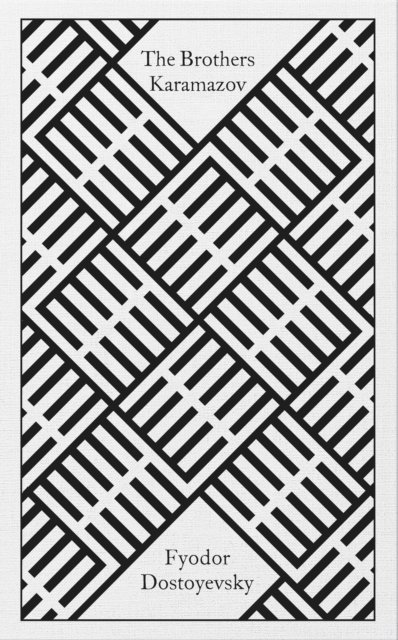
The Brothers Karamazov Fyodor Dostoyevsky
Nuestros clientes opinan:


También disponible como:
- Paperback Book (2007) $ 11,99
- Paperback Book (2003) $ 14,49
- Paperback Book (2011) $ 17,49
- Paperback Book (2015) $ 19,49
- Paperback Book (2010) $ 24,49
- Paperback Book (2018) $ 27,99
- Paperback Book (2015) $ 28,49
- Paperback Book (2016) $ 30,49
- Paperback Book (2020) $ 30,99
- Paperback Book (2017) $ 30,99
- Paperback Book (2019) $ 31,99
- Paperback Book (2017) $ 32,49
- Paperback Book (2014) $ 36,49
- Paperback Book (2019) $ 38,49
- Paperback Book (2012) $ 41,49
- Paperback Book (2011) $ 43,99
- Paperback Book (2020) $ 45,49
- Paperback Book (2021) $ 46,49
- Paperback Book (2018) $ 48,49
- Paperback Book (2021) $ 49,49
- Hardcover Book (2018) $ 50,49
- Hardcover Book (2020) $ 52,49
- Hardcover Book (2018) $ 55,49
- Paperback Book (2022) $ 60,49
- Hardcover Book (2018) $ 60,49
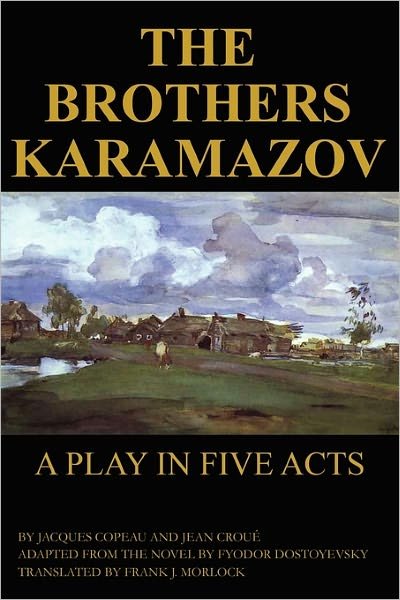
The Brothers Karamazov
Fyodor Dostoyevsky
Publisher Marketing: The Brothers Karamazov, is the final novel by the Russian author Fyodor Dostoyevsky. Dostoyevsky spent nearly two years writing The Brothers Karamazov, which was published as a serial in The Russian Messenger and completed in November 1880. Dostoyevsky intended it to be the first part in an epic story titled The Life of a Great Sinner, but he died less than four months after its publication. The Brothers Karamazov is a passionate philosophical novel set in 19th century Russia, that enters deeply into the ethical debates of God, free will, and morality. It is a spiritual drama of moral struggles concerning faith, doubt, and reason, set against a modernizing Russia. Dostoyevsky composed much of the novel in Staraya Russa, which inspired the main setting. Since its publication, it has been acclaimed as one of the supreme achievements in literature. Although written in the 19th century, The Brothers Karamazov displays a number of modern elements. Dostoyevsky composed the book with a variety of literary techniques. Though privy to many of the thoughts and feelings of the protagonists, the narrator is a self-proclaimed writer; he discusses his own mannerisms and personal perceptions so often in the novel that he becomes a character. Through his descriptions, the narrator's voice merges imperceptibly into the tone of the people he is describing, often extending into the characters' most personal thoughts. There is no voice of authority in the story (see Mikhail Bakhtin's Problems of Dostoyevsky's Poetics for more on the relationship between Dostoyevsky and his characters). In addition to the principal narrator there are several sections narrated by other characters entirely, such as the story of the Grand Inquisitor and Zosima's confessions. This technique enhances the theme of truth, making many aspects of the tale completely subjective. Dostoyevsky uses individual styles of speech to express the inner personality of each person. For example, the attorney Fetyukovich (based on Vladimir Spasovich) is characterized by malapropisms (e.g. 'robbed' for 'stolen', and at one point declares possible suspects in the murder 'irresponsible' rather than innocent). Several plot digressions provide insight into other apparently minor characters. For example, the narrative in Book Six is almost entirely devoted to Zosima's biography, which contains a confession from a man whom he met many years before. Dostoyevsky does not rely on a single source or a group of major characters to convey the themes of this book, but uses a variety of viewpoints, narratives and characters throughout. Major characters Fyodor Karamazov is the father, a 55-year-old "sponger" and buffoon who sires three sons during his two marriages. He is rumored to have fathered an illegitimate son, Pavel Fyodorovich Smerdyakov, whom he employs as his servant. Fyodor takes no interest in any of his sons, who are, as a result, raised apart from each other and their father. The relationship between Fyodor and his adult sons drives much of the plot in the novel. Dmitri Fyodorovich Karamazov (a.k.a. Mitya, Mitka, Mitenka, Mitri) is Fyodor Karamazov's eldest son and the only offspring of his first marriage, with Adelaida Ivanovna Miusov. Dmitri is considered to be a sensualist, much like his father, spending large amounts of money on nights filled with champagne, women, and whatever entertainment and stimulation money can buy. Dmitri is brought into contact with his family when he finds himself in need of his inheritance, which he believes is being withheld by his father. He was engaged to be married to Katerina Ivanovna, but breaks that off after falling in love with Grushenka. Dmitri's relationship with his father is the most volatile of the brothers, escalating to violence as he and his father begin fighting over the same woman, Grushenka. While he maintains a good relationship with Ivan, he is closest to his younger brother Alyosha, referring to him as his "cherub." Review Citations: Ingram Advance 07/01/2005 pg. 72 (EAN 9780486437910, Paperback) Publishers Weekly 09/30/2013 (EAN 9781843796824, Compact Disc) Library Journal 06/15/2014 pg. 52 (EAN 9781843796824, Compact Disc) Contributor Bio: Dostoyevsky, Fyodor Fyodor Dostoyevsky was a Russian novelist, short story writer and essayist whose literary works explored human psychology in the troubled political, social, and spiritual context of nineteenth-century Russia. A student of the the Nikolayev Military Engineering Institute, Dostoyevsky initially worked as an engineer, but began translating books to earn extra money. The publication of his first novel, Poor Folk, allowed him to join St. Petersburg's literary circles. A prolific writer, Dostoyevsky is best known for work from the latter part of his career, including the classic novels Crime and Punishment, The Idiot and The Brothers Karamazov. Dostoyevsky's influence extends to authors as diverse as Anton Chekhov, James Joyce, Ernest Hemingway, and Jean-Paul Sartre, among many others. He died in 1881. Contributor Bio: Ukray, Murat Walter Crane (Liverpool, 1845 - 1915, Horsham) was an English artist and book illustrator. He is considered to be the most influential, and among the most prolific, children's book creator of his generation and, along with Randolph Caldecott and Kate Greenaway, one of the strongest contributors to the child's nursery motif that the genre of English children's illustrated literature would exhibit in its developmental stages in the latter 19th century. His work featured some of the more colourful and detailed beginnings of the child-in-the-garden motifs that would characterize many nursery rhymes and children's stories for decades to come. He was part of the Arts and Crafts movement and produced an array of paintings, illustrations, children's books, ceramic tiles and other decorative arts. Contributor Bio: Garnett, Constance Fyodor Mikhailovich Dostoyevsky (Russian: 11 November 1821 - 9 February 1881), sometimes transliterated Dostoevsky, was a Russian novelist, short story writer, essayist and philosopher. Dostoyevsky's literary works explore human psychology in the context of the troubled political, social, and spiritual atmosphere of 19th-century Russia. He began writing in his 20s, and his first novel, Poor Folk, was published in 1846 when he was 25. His major works include Crime and Punishment (1866), The Idiot (1869), and The Brothers Karamazov (1880). His output consists of eleven novels, three novellas, seventeen short novels and numerous other works. Many literary critics rate him as one of the greatest and most prominent psychologists in world literature. Born in Moscow in 1821, Dostoyevsky was introduced to literature at an early age through fairy tales and legends, and through books by Russian and foreign authors. His mother died in 1837, when he was 15, and around the same time he left school to enter the Nikolayev Military Engineering Institute. After graduating, he worked as an engineer and briefly enjoyed a lavish lifestyle, translating books to earn extra money. In the mid-1840s he wrote his first novel, Poor Folk, which gained him entry into St. Petersburg's literary circles. In 1849 he was arrested for his involvement in the Petrashevsky Circle, a secret society of liberal utopians that also functioned as a literary discussion group. He and other members were condemned to death, but at the last moment, a note from Tsar Nicholas I was delivered to the scene of the firing squad, commuting the sentence to four years' hard labour in Siberia. His seizures, which may have started in 1839, increased in frequency there, and he was diagnosed with epilepsy. On his release, he was forced to serve as a soldier, before being discharged on grounds of ill health. In the following years, Dostoyevsky worked as a journalist, publishing and editing several magazines of his own and later A Writer's Diary, a collection of his writings. He began to travel around western Europe and developed a gambling addiction, which led to financial hardship. For a time, he had to beg for money, but he eventually became one of the most widely read and highly regarded Russian writers. His books have been translated into more than 170 languages. Dostoyevsky influenced a multitude of writers and philosophers, from Anton Chekhov and Ernest Hemingway to Friedrich Nietzsche and Jean-Paul Sartre.
| Medios de comunicación | Libros Paperback Book (Libro con tapa blanda y lomo encolado) |
| Publicado | 18 de septiembre de 2014 |
| ISBN13 | 9781502426215 |
| Editores | Createspace |
| Páginas | 820 |
| Dimensiones | 189 × 246 × 41 mm · 1,44 kg |
Mas por Fyodor Dostoyevsky
Mostrar todo


![Cover for Fyodor Dostoyevsky · Crime and Punishment - Word Cloud Classics (Paperback Book) [2nd edition] (2025)](https://imusic.b-cdn.net/images/item/original/722/9781667209722.jpg?fyodor-dostoyevsky-2025-crime-and-punishment-word-cloud-classics-paperback-book&class=scaled&v=1730149533)






Más de esta serie


Ver todo de Fyodor Dostoyevsky ( Ej. Paperback Book , Hardcover Book , Book , CD y CD MP3 )