
Recomienda este artículo a tus amigos:
The Gold-bug Edgar Allan Poe
Nuestros clientes opinan:


También disponible como:
The Gold-bug
Edgar Allan Poe
Publisher Marketing: "The Gold-Bug" is a short story by Edgar Allan Poe. "The Gold-Bug" is a short story by Edgar Allan Poe. Set on Sullivan's Island, South Carolina, the plot follows William Legrand, who was recently bitten by a gold-colored bug. His servant, Jupiter, fears Legrand is going insane and goes to Legrand's friend, an unnamed narrator, who agrees to visit his old friend. Legrand pulls the other two into an adventure after deciphering a secret message that will lead to a buried treasure. The story is often compared with Poe's "tales of ratiocination" as an early form of detective fiction. Poe became aware of the public's interest in secret writing in 1840 and asked readers to challenge his skills as a code-breaker. Poe took advantage of the popularity of cryptography as he was writing "The Gold-Bug," and the success of the story centers on one such cryptogram. The characterization of Legrand's servant Jupiter has been criticized as racist from a modern perspective, especially because his speech is written in dialect and because of his often comical dialogue. Poe submitted "The Gold-Bug" as an entry to a writing contest sponsored by the Philadelphia Dollar Newspaper. His story won the grand prize and was published in three installments, beginning in June 1843. The prize also included $100, probably the largest single sum Poe received for any of his works. "The Gold-Bug" was an instant success and was the most popular and most widely read of Poe's works during his lifetime. It also helped popularize cryptograms and secret writing. William Legrand becomes obsessed with searching for treasure after being bitten by a scarab-like bug thought to be made of pure gold. He notifies his closest friend, the narrator, telling him to immediately come visit him at his home on Sullivan's Island in South Carolina. Upon the narrator's arrival, Legrand informs him that they are embarking upon a search for lost treasure along with his African-American servant Jupiter. The narrator has intense doubt and questions whether Legrand, who has recently lost his fortune, has gone insane. Legrand captured the bug but let someone else borrow it; he draws a picture of the bug instead. The narrator says that the image looks like a skull. Legrand is insulted and inspects his own drawing before stuffing it into a drawer which he locks, to the narrator's confusion. Uncomfortable, the narrator leaves Legrand and returns home to Charleston. Contributor Bio: Poe, Edgar Allan Author, poet, and literary critic, Edgar Allan Poe is credited with pioneering the short story genre, inventing detective fiction, and contributing to the development of science fiction. However, Poe is best known for his works of the macabre, including such infamous titles as "The Raven," "The Pit and the Pendulum," "The Murders in the Rue Morgue," "Lenore," and "The Fall of the House of Usher." Part of the American Romantic Movement, Poe was one of the first writers to make his living exclusively through his writing, working for literary journals and becoming known as a literary critic. His works have been widely adapted in film. Edgar Allan Poe died of a mysterious illness in 1849 at the age of 40.
| Medios de comunicación | Libros Paperback Book (Libro con tapa blanda y lomo encolado) |
| Publicado | 11 de julio de 2014 |
| ISBN13 | 9781500494346 |
| Editores | Createspace |
| Páginas | 68 |
| Dimensiones | 129 × 198 × 4 mm · 77 g |
Mas por Edgar Allan Poe
Mostrar todo


![Cover for Edgar Allan Poe · De Tre August Dupin-fortællinger (Paperback Book) [1.º edición] (2026)](https://imusic.b-cdn.net/images/item/original/969/9788792510969.jpg?edgar-allan-poe-2026-de-tre-august-dupin-fortaellinger-paperback-book&class=scaled&v=1775857663)

![Cover for Edgar Allan Poe · The Raven & Other Writings - Monstrous Classics Collection (Paperback Book) [Reissue edition] (2025)](https://imusic.b-cdn.net/images/item/original/721/9781665974721.jpg?edgar-allan-poe-2025-the-raven-other-writings-monstrous-classics-collection-paperback-book&class=scaled&v=1732573070)

![Cover for Edgar Allan Poe · The Selected Works of Edgar Allan Poe - Word Cloud Classics (Paperback Book) [2nd edition] (2025)](https://imusic.b-cdn.net/images/item/original/791/9781667209791.jpg?edgar-allan-poe-2025-the-selected-works-of-edgar-allan-poe-word-cloud-classics-paperback-book&class=scaled&v=1739859058)






Más de esta serie


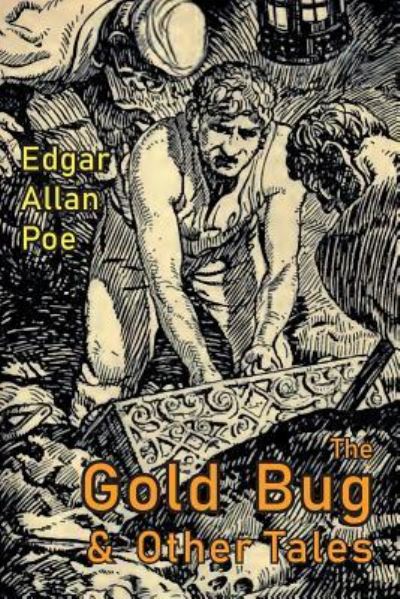
![Cover for Edgar Allan Poe · The Gold-Bug and Other Tales - Thrift Editions (Paperback Book) [Unabridged edition] (2000)](https://imusic.b-cdn.net/images/item/original/750/9780486268750.jpg?edgar-allan-poe-2000-the-gold-bug-and-other-tales-thrift-editions-paperback-book&class=scaled&v=1404820073)
Ver todo de Edgar Allan Poe ( Ej. Paperback Book , Hardcover Book , Book , CD y Audiolibro (CD) )