
Recomienda este artículo a tus amigos:
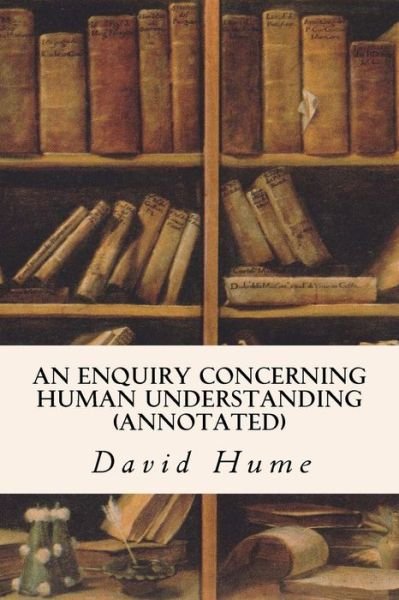
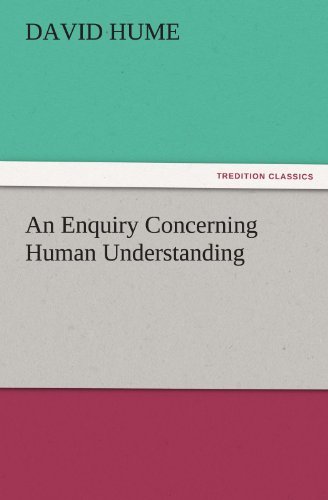
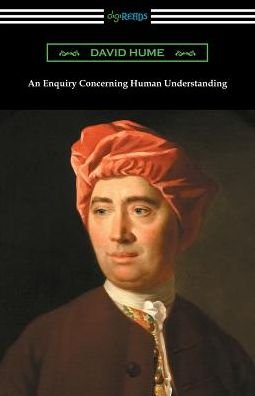
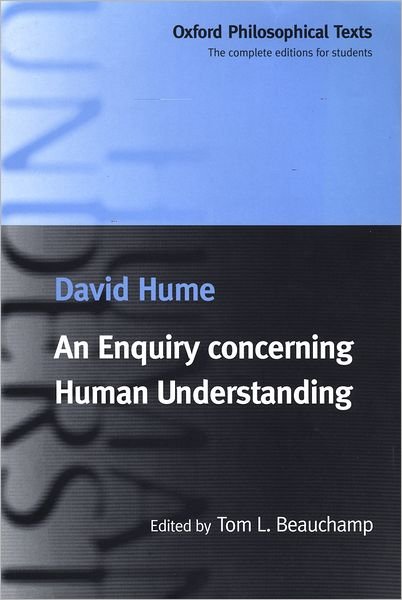
An Enquiry Concerning Human Understanding David Hume
Pedido desde almacén remoto
Nuestros clientes opinan:


También disponible como:
- Paperback Book (2018) $ 13,99
- Paperback Book (2018) $ 13,99
- Paperback Book (2015) $ 14,99
- Paperback Book (2011) $ 14,99
- Paperback Book (2014) $ 14,99
- Paperback Book (2017) $ 14,99
- Paperback Book (2015) $ 14,99
- Paperback Book (2016) $ 15,49
- Paperback Book (2015) $ 15,99
- Paperback Book (2015) $ 15,99
- Paperback Book (2016) $ 16,49
- Paperback Book (2018) $ 16,99
- Paperback Book (2026) $ 16,99
- Paperback Book (2021) $ 16,99
- Paperback Book (2013) $ 17,49
- Paperback Book (2014) $ 17,49
- Paperback Book (2017) $ 17,49
- Paperback Book (2016) $ 17,49
- Paperback Book (2017) $ 17,49
- Paperback Book (2018) $ 18,49
- Paperback Book (2019) $ 18,99
- Paperback Book (1988) $ 18,99
- Paperback Book (2017) $ 19,99
- Paperback Book (2021) $ 20,49
- Paperback Book (2016) $ 20,99
An Enquiry Concerning Human Understanding
David Hume
Publisher Marketing: David Hume (7 May 1711- 25 August 1776) was a Scottish philosopher, historian, economist, and essayist, known especially for his philosophical empiricism and skepticism. He is regarded as one of the most important figures in the history of Western philosophy and the Scottish Enlightenment. Hume is often grouped with John Locke, George Berkeley, and a handful of others as a British Empiricist. Beginning with his A Treatise of Human Nature (1739), Hume strove to create a total naturalistic "science of man" that examined the psychological basis of human nature. In stark opposition to the rationalists who preceded him, most notably Descartes, he concluded that desire rather than reason governed human behaviour, saying: "Reason is, and ought only to be the slave of the passions." A prominent figure in the skeptical philosophical tradition and a strong empiricist, he argued against the existence of innate ideas, concluding instead that humans have knowledge only of things they directly experience. Thus he divides perceptions between strong and lively "impressions" or direct sensations and fainter "ideas," which are copied from impressions. He developed the position that mental behaviour is governed by "custom"; our use of induction, for example, is justified only by our idea of the "constant conjunction" of causes and effects. Hume held notoriously ambiguous views of Christianity, but he famously challenged the argument from design in his Dialogues Concerning Natural Religion (1779). Contributor Bio: Hume, David David Hume (1711-1776), along with Adam Smith and Thomas Reid, was one of the most important figures of the Scottish Enlightenment. His writings, which encompass philosophy, economics, and history, include "A Treatise of Human Nature; Essays, Moral and Political; and An Enquiry Concerning Human Understanding."
| Medios de comunicación | Libros Paperback Book (Libro con tapa blanda y lomo encolado) |
| Publicado | 10 de julio de 2014 |
| ISBN13 | 9781500468576 |
| Editores | Createspace |
| Páginas | 72 |
| Dimensiones | 152 × 229 × 4 mm · 108 g |
Mas por David Hume
Mostrar todo
![Cover for David Hume · My Own Life - Luminary Collection (Paperback Book) [Bilingual edition] (2024)](https://imusic.b-cdn.net/images/item/original/004/9781916658004.jpg?david-hume-2024-my-own-life-luminary-collection-paperback-book&class=scaled&v=1763528421)



![Cover for David Hume · Histoire D'angleterre. T. 2 (Ed.1839-1840) (French Edition) (Paperback Book) [French edition] (2022)](https://imusic.b-cdn.net/images/item/original/184/9782012666184.jpg?david-hume-2022-histoire-d-angleterre-t-2-ed-1839-1840-french-edition-paperback-book&class=scaled&v=1410165997)
![Cover for David Hume · Discours Politiques De Monsieur Hume Traduits De L'anglois. T. 1 (Ed.1754) (French Edition) (Paperback Book) [French edition] (2022)](https://imusic.b-cdn.net/images/item/original/236/9782012657236.jpg?david-hume-2022-discours-politiques-de-monsieur-hume-traduits-de-l-anglois-t-1-ed-1754-french-edition-paperback-book&class=scaled&v=1409891436)













Más de esta serie
![Cover for David Hume · An Enquiry concerning Human Understanding: A Critical Edition - Clarendon Hume Edition Series (Hardcover Book) [Critical edition] (2000)](https://imusic.b-cdn.net/images/item/original/609/9780198250609.jpg?david-hume-2000-an-enquiry-concerning-human-understanding-a-critical-edition-clarendon-hume-edition-series-hardcover-book&class=scaled&v=1400854696)
Ver todo de David Hume ( Ej. Paperback Book , Hardcover Book , Book , CD y Sewn Spine Book )