
Recomienda este artículo a tus amigos:
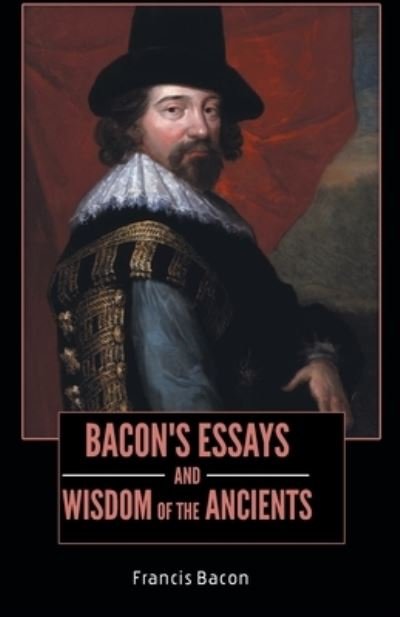
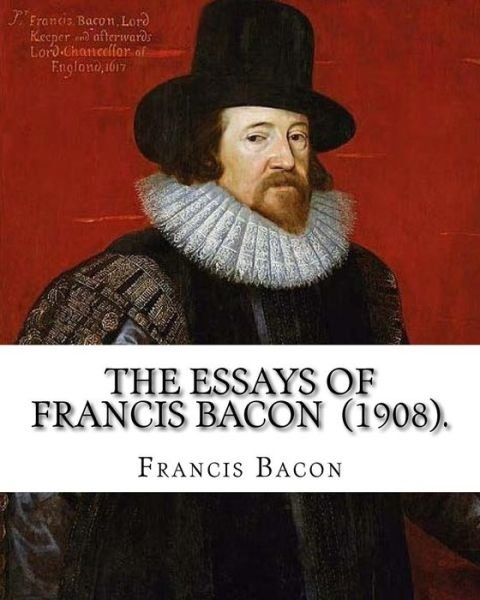
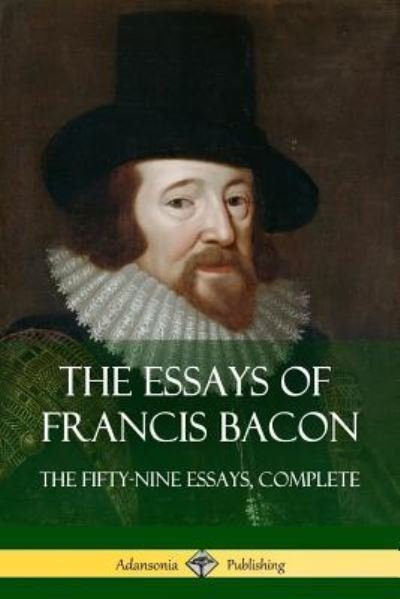
The Essays of Francis Bacon
Nuestros clientes opinan:


También disponible como:
The Essays of Francis Bacon
Francis Bacon
Publisher Marketing: WHAT is truth? said jesting Pilate, and would not stay for an answer. Certainly there be, that delight in giddiness, and count it a bondage to fix a belief; affecting free-will in thinking, as well as in acting. And though the sects of philosophers of that kind be gone, yet there remain certain discoursing wits, which are of the same veins, though there be not so much blood in them, as was in those of the ancients. But it is not only the difficulty and labor, which men take in finding out of truth, nor again, that when it is found, it imposeth upon men's thoughts, that doth bring lies in favor; but a natural, though corrupt love, of the lie itself. One of the later school of the Grecians, examineth the matter, and is at a stand, to think what should be in it, that men should love lies; where neither they make for pleasure, as with poets, nor for advantage, as with the merchant; but for the lie's sake. But I cannot tell; this same truth, is a naked, and open day-light, that doth not show the masks, and mummeries, and triumphs, of the world, half so stately and daintily as candle-lights. Truth may perhaps come to the price of a pearl, that showeth best by day; but it will not rise to the price of a diamond, or carbuncle, that showeth best in varied lights. A mixture of a lie doth ever add pleasure. Doth any man doubt, that if there were taken out of men's minds, vain opinions, flattering hopes, false valuations, imaginations as one would, and the like, but it would leave the minds, of a number of men, poor shrunken things, full of melancholy and indisposition, and unpleasing to themselves? Contributor Bio: Bacon, Francis Francis Bacon, 1561 - 1626), was an English philosopher, statesman, scientist, jurist, orator, essayist, and author. He served both as Attorney General and Lord Chancellor of England. After his death, he remained extremely influential through his works, especially as philosophical advocate and practitioner of the scientific method during the scientific revolution. Bacon has been called the father of empiricism. His works established and popularised inductive methodologies for scientific inquiry, often called the Baconian method, or simply the scientific method. His demand for a planned procedure of investigating all things natural marked a new turn in the rhetorical and theoretical framework for science, much of which still surrounds conceptions of proper methodology today. Bacon was knighted in 1603, and created Baron Verulam in 1618 and Viscount St. Alban in 1621; as he died without heirs, both peerages became extinct upon his death. He famously died of pneumonia, contracted while studying the effects of freezing on the preservation of meat. The succession of James I brought Bacon into greater favour. He was knighted in 1603. In another shrewd move, Bacon wrote his Apologies in defence of his proceedings in the case of Essex, as Essex had favoured James to succeed to the throne. The following year, during the course of the uneventful first parliament session, Bacon married Alice Barnham. In June 1607 he was at last rewarded with the office of solicitor general. The following year, he began working as the Clerkship of the Star Chamber. Despite a generous income, old debts still couldn't be paid. He sought further promotion and wealth by supporting King James and his arbitrary policies. In 1610 the fourth session of James's first parliament met. Despite Bacon's advice to him, James and the Commons found themselves at odds over royal prerogatives and the king's embarrassing extravagance. The House was finally dissolved in February 1611. Throughout this period Bacon managed to stay in the favour of the king while retaining the confidence of the Commons.
| Medios de comunicación | Libros Paperback Book (Libro con tapa blanda y lomo encolado) |
| Publicado | 22 de abril de 2014 |
| ISBN13 | 9781499192889 |
| Editores | Createspace |
| Páginas | 94 |
| Dimensiones | 152 × 229 × 5 mm · 136 g |
Mas por Francis Bacon
Mostrar todo


![Cover for Francis Bacon · Oeuvres De Bacon (Ed.1843) (French Edition) (Paperback Book) [French edition] (2022)](https://imusic.b-cdn.net/images/item/original/117/9782012758117.jpg?francis-bacon-2022-oeuvres-de-bacon-ed-1843-french-edition-paperback-book&class=scaled&v=1409945783)
![Cover for Francis Bacon · Oeuvres De Francois Bacon. Volume 9 (Ed.1799-1802) (French Edition) (Paperback Book) [French edition] (2022)](https://imusic.b-cdn.net/images/item/original/421/9782012758421.jpg?francis-bacon-2022-oeuvres-de-francois-bacon-volume-9-ed-1799-1802-french-edition-paperback-book&class=scaled&v=1409683103)


![Cover for Francis Bacon · Sylva sylvarum; : Or, A natural history, in ten centuries. Whereunto is newly added, The history natural and experimental of liee [sic] and death; or, Of the prolongation of life - Vol. 2 (Paperback Book) (2020)](https://imusic.b-cdn.net/images/item/original/738/9783337774738.jpg?francis-bacon-2020-sylva-sylvarum-or-a-natural-history-in-ten-centuries-whereunto-is-newly-added-the-history-natural-and-experimental-of-liee-sic-and-death-or-of-the-prolongation-of-life-vol-2-paperback-book&class=scaled&v=1604023862)
Más de esta serie

Ver todo de Francis Bacon ( Ej. Paperback Book , Hardcover Book , Book , DVD y Book pack )