
Recomienda este artículo a tus amigos:
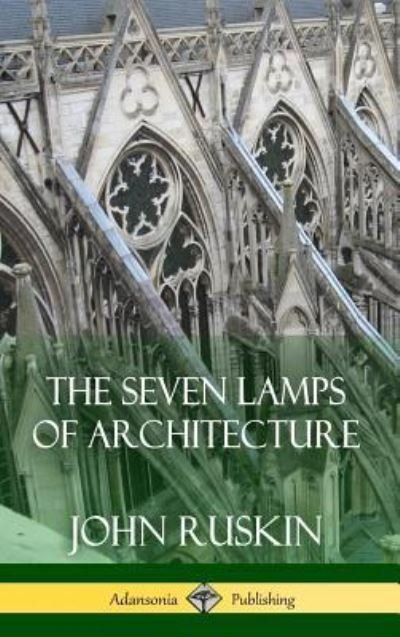
The Seven Lamps of Architecture John Ruskin
Nuestros clientes opinan:


También disponible como:
The Seven Lamps of Architecture
John Ruskin
Publisher Marketing: The memoranda which form the basis of the following Essay have been thrown together during the preparation of one of the sections of the third volume of "Modern Painters." I once thought of giving them a more expanded form; but their utility, such as it may be, would probably be diminished by farther delay in their publication, more than it would be increased by greater care in their arrangement. Obtained in every case by personal observation, there may be among them some details valuable even to the experienced architect; but with respect to the opinions founded upon them I must be prepared to bear the charge of impertinence which can hardly but attach to the writer who assumes a dogmatical tone in speaking of an art he has never practised. There are, however, cases in which men feel too keenly to be silent, and perhaps too strongly to be wrong; I have been forced into this impertinence; and have suffered too much from the destruction or neglect of the architecture I best loved, and from the erection of that which I cannot love, to reason cautiously respecting the modesty of my opposition to the principles which have induced the scorn of the one, or directed the design of the other. And I have been the less careful to modify the confidence of my statements of principles, because in the midst of the opposition and uncertainty of our architectural systems, it seems to me that there is something grateful in any positive opinion, though in many points wrong, as even weeds are useful that grow on a bank of sand. Every apology is, however, due to the reader, for the hasty and imperfect execution of the plates. Having much more serious work in hand, and desiring merely to render them illustrative of my meaning, I have sometimes very completely failed even of that humble aim; and the text, being generally written before the illustration was completed, sometimes naively describes as sublime or beautiful, features which the plate represents by a blot. I shall be grateful if the reader will in such cases refer the expressions of praise to the Architecture, and not to the illustration. Contributor Bio: Ruskin, John John Ruskin ( 1819 - 1900) was the leading English art critic of the Victorian era, also an art patron, draughtsman, watercolourist, a prominent social thinker and philanthropist. He wrote on subjects ranging from geology to architecture, myth to ornithology, literature to education, and botany to political economy. His writing styles and literary forms were equally varied. Ruskin penned essays and treatises, poetry and lectures, travel guides and manuals, letters and even a fairy tale. The elaborate style that characterised his earliest writing on art was later superseded by a preference for plainer language designed to communicate his ideas more effectively. In all of his writing, he emphasised the connections between nature, art and society. He also made detailed sketches and paintings of rocks, plants, birds, landscapes, and architectural structures and ornamentation. He was hugely influential in the latter half of the 19th century, and up to the First World War. After a period of relative decline, his reputation has steadily improved since the 1960s with the publication of numerous academic studies of his work. Today, his ideas and concerns are widely recognised as having anticipated interest in environmentalism, sustainability and craft.
| Medios de comunicación | Libros Paperback Book (Libro con tapa blanda y lomo encolado) |
| Publicado | 9 de abril de 2014 |
| ISBN13 | 9781497579835 |
| Editores | Createspace |
| Páginas | 112 |
| Dimensiones | 152 × 229 × 6 mm · 158 g |
Mas por John Ruskin
Mostrar todo





![Cover for John Ruskin · The Crown of Wild Olive [microform]: Four Lectures on Industry and War (Paperback Book) (2021)](https://imusic.b-cdn.net/images/item/original/363/9781015009363.jpg?john-ruskin-2021-the-crown-of-wild-olive-microform-four-lectures-on-industry-and-war-paperback-book&class=scaled&v=1642670107)
Más de esta serie
![Cover for John Ruskin · The Seven Lamps of Architecture - Dover Architecture (Paperback Book) [New edition] (2000)](https://imusic.b-cdn.net/images/item/original/454/9780486261454.jpg?john-ruskin-2000-the-seven-lamps-of-architecture-dover-architecture-paperback-book&class=scaled&v=1534976366)

![Cover for John Ruskin · The Seven Lamps of Architecture. [2d Ed.] With an Introd. by Selwyn Image] (Paperback Book) (2021)](https://imusic.b-cdn.net/images/item/original/889/9781014713889.jpg?john-ruskin-2021-the-seven-lamps-of-architecture-2d-ed-with-an-introd-by-selwyn-image-paperback-book&class=scaled&v=1642647758)
Ver todo de John Ruskin ( Ej. Paperback Book , Hardcover Book , Book , Book pack y CD-ROM )