
Recomienda este artículo a tus amigos:
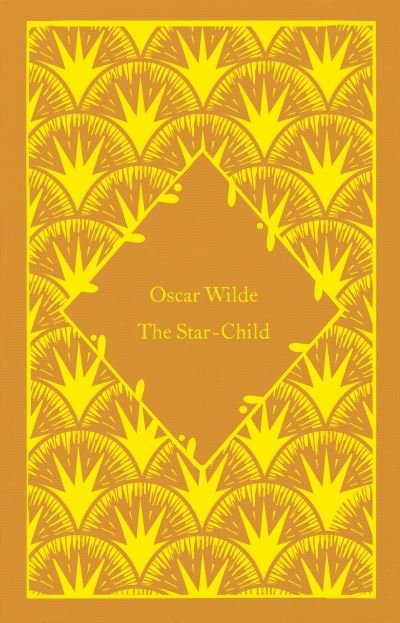
The Star-child Oscar Wilde


The Star-child
Oscar Wilde
Publisher Marketing: The Young King is a short story by Oscar Wilde. Dedicated to Margaret Lady Brooke (the Ranee of Sarawak) The Young King tells the story of the illegitimate shepherd son of the recently dead king's daughter of an unnamed country. Being his only heir, he is brought to the palace to await his accession. There, he is in awe of the splendor of his new home and anxiously awaits his new crown, scepter, and robe which are soon to be delivered to him for his coronation in the morning. During the night, he has three nightmares, one for each element of his raiment, showing him where they came from and how they were obtained. The first dream shows a group of starving peasants working at looms to weave his robe where they receive little payment or food despite being worked so hard. The second dream shows a group of slaves on a ship where one slave has his ears and nostrils filled with wax and sent underwater to find pearls for the sceptre and dies after finding the best pearl. The third dream is the most elaborate and deals with the source of his new crown's rubies. In it, men excavate a dry riverbed in a tropical jungle, while overlooking them, the god Death tries to bargain with the goddess Avarice for a single grain of her corn. Each time Avarice refuses, Death calls Ague, Fever and Plague to kill one third of her servants. On the coronation day, the Young King refuses the costume brought to him, and makes a crown from a loop of briers, a scepter from a stick, and wears his shepherds tunic in place of a robe. The nobles rebuke him for bringing shame to their class, the peasants for trying to deprive them of work, and the bishops for foolishly trying to take the world's suffering upon himself. The story ends with his approaching the altar of the cathedral alone, and his stick-scepter blossoming with white lilies, his brier-crown with red roses, and his robe colored by the light streaming through the stained-glass window; the bishop says that a much higher being (God) has officially crowned the young king. Contributor Bio: Wilde, Oscar Oscar Wilde was a Victorian-era British author and playwright. In his youth, Wilde became attached to the Aesthetic Movement, which emphasized the appreciation of the aesthetic value of cultural creations above social or political purposes, and this philosophy influenced his work throughout his career. The themes of art and beauty are particularly present in his only novel, The Picture of Dorian Gray, , and in his two most popular dramatic works, An Ideal Husband and The Importance of Being Earnest. A quarrel with the Marquess of Queensberry, the father of Wilde's lover, Lord Alfred, resulted in Wilde's arrest and imprisonment for gross indecency. Wilde died in 1900, penniless and in exile, as a result of cerebral meningitis contracted while in prison.
| Medios de comunicación | Libros Paperback Book (Libro con tapa blanda y lomo encolado) |
| Publicado | 16 de noviembre de 2013 |
| ISBN13 | 9781493791873 |
| Editores | Createspace |
| Páginas | 32 |
| Dimensiones | 129 × 198 × 2 mm · 40 g |
Mas por Oscar Wilde
Mostrar todo



![Cover for Oscar Wilde · The Picture of Dorian Gray (Paperback Book) [Annotated edition] (2026)](https://imusic.b-cdn.net/images/item/original/065/9781963549065.jpg?oscar-wilde-2026-the-picture-of-dorian-gray-paperback-book&class=scaled&v=1741618835)




![Cover for Oscar Wilde · The Importance of Being Earnest and Other Plays - Oxford World's Classics (Paperback Book) [2 Revised edition] (2025)](https://imusic.b-cdn.net/images/item/original/024/9780192848024.jpg?oscar-wilde-2025-the-importance-of-being-earnest-and-other-plays-oxford-world-s-classics-paperback-book&class=scaled&v=1726995651)


![Cover for Oscar Wilde · The Pictures of Dorian Gray (Paperback Book) [Includes Both The 20-chapter & 13-chapter edition] (2024)](https://imusic.b-cdn.net/images/item/original/553/9781434441553.jpg?oscar-wilde-2024-the-pictures-of-dorian-gray-paperback-book&class=scaled&v=1419033264)


Más de esta serie
Ver todo de Oscar Wilde ( Ej. Paperback Book , Hardcover Book , Book , CD y Sewn Spine Book )