
Recomienda este artículo a tus amigos:
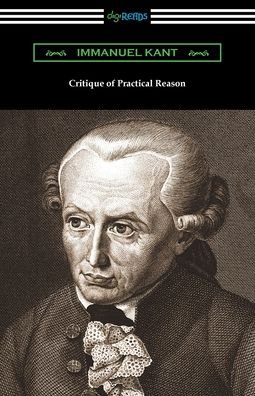
The Critique of Practical Reason Immanuel Kant
Nuestros clientes opinan:


También disponible como:
- Paperback Book (2014) $ 13,99
- Paperback Book (2018) $ 13,99
- Paperback Book (2017) $ 15,49
- Paperback Book (2016) $ 15,49
- Paperback Book (2018) $ 16,49
- Paperback Book (2019) $ 18,99
- Paperback Book (2024) $ 19,49
- Paperback Book (2014) $ 21,99
- Paperback Book (2012) $ 22,99
- Paperback Book (2020) $ 24,49
- Paperback Book (2011) $ 24,49
- Hardcover Book (2024) $ 28,49
- Hardcover Book (2018) $ 30,99
- Hardcover Book (2020) $ 41,99
The Critique of Practical Reason
Immanuel Kant
This historic book may have numerous typos and missing text. Purchasers can download a free scanned copy of the original book (without typos) from the publisher. Not indexed. Not illustrated. 1879 Excerpt: ... but of which speculative reason was compelled at least to assume the possibility (in order to find amongst its cosmological ideas the unconditioned in the chain of causality, so as not to contradict itself),--I mean the faculty of freedom. The moral law which itself does not require a justification, proves not merely the possibility of freedom, but that it really belongs to beings who recognise this law as binding on themselves. The moral law is in facta law of the causality of free agents, and therefore of the possibility of a supersensible system of nature, just as the metaphysical law of events in the world of sense was a law of causality of the sensible system of nature; and it therefore determines what speculative philosophy was compelled to leave undetermined, namely, the law for a causality, the concept of which in the latter was only negative; and therefore for the first time gives this concept objective reality. This sort of credential of the moral law, viz., that it is set forth as a principle of the deduction of freedom, which is a causality of pure reason, is a sufficient substitute for all a priori justification, since theoretic reason was compelled to assume at least the possibility of freedom, in order to satisfy a want of its own. For the moral law proves its reality, so as even to satisfy the critique of the speculative reason, by the fact that it adds a positive definition to a causality previously conceivedjOnly negatively(the possibility of which was incomprehensible to speculative reason, which yet was compelled to suppose it. For it adds the notion of a reason that directly determines the will (by imposing on its maxims, the condition of a universal legislative form;) and thus it is able for the first time to give objective, though on...
| Medios de comunicación | Libros Paperback Book (Libro con tapa blanda y lomo encolado) |
| Publicado | 21 de abril de 2011 |
| ISBN13 | 9781447402756 |
| Editores | Rene Press |
| Páginas | 160 |
| Dimensiones | 216 × 140 × 9 mm · 208 g |
| Lengua | Inglés |
Mas por Immanuel Kant
Mostrar todo




















Mere med samme udgiver















Ver todo de Immanuel Kant ( Ej. Paperback Book , Hardcover Book , Book , Sewn Spine Book y CD )