
Recomienda este artículo a tus amigos:
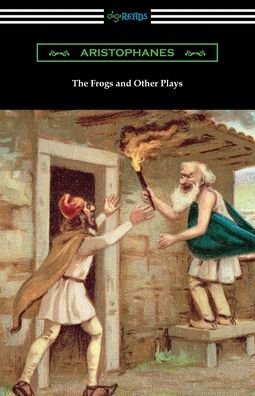
The Frogs, a Comedy. Translated from the Greek of Aristophanes, by C. Dunster, M.a.


The Frogs, a Comedy. Translated from the Greek of Aristophanes, by C. Dunster, M.a.
Aristophanes
Publisher Marketing:
The 18th century was a wealth of knowledge, exploration and rapidly growing technology and expanding record-keeping made possible by advances in the printing press. In its determination to preserve the century of revolution, Gale initiated a revolution of its own: digitization of epic proportions to preserve these invaluable works in the largest archive of its kind. Now for the first time these high-quality digital copies of original 18th century manuscripts are available in print, making them highly accessible to libraries, undergraduate students, and independent scholars. Western literary study flows out of eighteenth-century works by Alexander Pope, Daniel Defoe, Henry Fielding, Frances Burney, Denis Diderot, Johann Gottfried Herder, Johann Wolfgang von Goethe, and others. Experience the birth of the modern novel, or compare the development of language using dictionaries and grammar discourses. ++++The below data was compiled from various identification fields in the bibliographic record of this title. This data is provided as an additional tool in helping to insure edition identification: ++++British LibraryT301330Reissue of 1785 edition, with new title page and dedication leaf. London: printed by and for John Nichols, Red-Lion Passage, Fleet-Street; and sold by Evans, Pall-Mall; Robson, Bond-Street; T. Payne, Mews-Gate; also by Deighton, Cambridge; Cooke, Oxford; Archer, Dublin; and Layng, Edinburgh., 1800. [2], vii, [1], 122p.; 4
Contributor Bio: Aristophanes
ARISTOPHANES, the most famous comic dramatist of ancient Greece, was born an Athenian citizen in about 445 B. C. Forty-four plays have been attributed to Aristophanes; eleven of these have survived. His plays are the only extant representatives of Greek Old Comedy, a dramatic form whose conventions made it inevitable that the author would comment on the political and social issues of fifth-century Athens. This Aristophanes did so well that Plato, asked by the tyrant of Syracuse for an analysis of Athenians, sent a copy of Aristophanes' plays in reply.
His earliest play, the Banqueters, won the second prize in 427 B. C. when the dramatist must have been less than eighteen years old, since, as he notes in the Clouds (423), he was too young to produce it in his own name. Another early play, the Babylonians, criticized the demagogue Cleon, who responded by subjecting Aristophanes to legal persecution, and as the author charges in the Acharnians, Cleon had "slanged, and lied, and slandered and betongued me . . . till I well nigh was done to death." Nevertheless, in the Knights (424), he renewed his attack on the popular Athenian leader and won first prize in that year's contest. Plutus (388) was the last of the author's plays to be produced in his lifetime.
| Medios de comunicación | Libros Paperback Book (Libro con tapa blanda y lomo encolado) |
| Publicado | 9 de junio de 2010 |
| ISBN13 | 9781170099056 |
| Editores | Gale Ecco, Print Editions |
| Páginas | 138 |
| Dimensiones | 246 × 189 × 7 mm · 258 g |
Mas por Aristophanes
Mostrar todo









![Cover for Aristophanes · The Acharnians [microform]; (Paperback Book) (2021)](https://imusic.b-cdn.net/images/item/original/834/9781015039834.jpg?aristophanes-2021-the-acharnians-microform-paperback-book&class=scaled&v=1639074050)
















Ver todo de Aristophanes ( Ej. Paperback Book , Hardcover Book , Book y CD )