Recomienda este artículo a tus amigos:
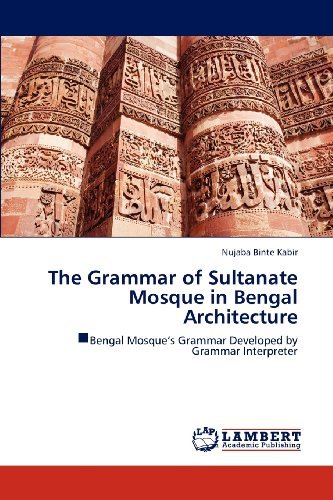
The Grammar of Sultanate Mosque in Bengal Architecture: Bengal Mosque's Grammar Developed by Grammar Interpreter Nujaba Binte Kabir
Pedido desde almacén remoto
Nuestros clientes opinan:


The Grammar of Sultanate Mosque in Bengal Architecture: Bengal Mosque's Grammar Developed by Grammar Interpreter
Nujaba Binte Kabir
Bengal (both Bangladesh and West Bengal of India), which is a deltaic region includes one of the most heavily populated concentrations of Muslims in the world and is isolated from the core land of Islamic civilization. Almost three quarters mosques were built in Bengal during independent Sultanate period (1342 to 1576). The characteristics of these mosques have changed a lot over time compared to the typical features of Islamic architecture. The architectural historians are trying to classify and differentiate the features of Islamic architecture based on the climate, geography and the cultural conditions of Bengal from decade to decade in a traditional way rather than emergent generation of a style. Shape grammar which had been explored by Stiny & Gips (1972) is a rule based methodology for analyzing and generating designs of any style . This book describes a grammar for Sultanate Mosques in Bengal architecture to give a new framework of understanding the style systematically. Shape grammar methodology is used to develop the grammar for Sultanate Mosques with the help of a shape grammar interpreter, Grammar Environment (Li et al, 2009).
| Medios de comunicación | Libros Paperback Book (Libro con tapa blanda y lomo encolado) |
| Publicado | 1 de junio de 2012 |
| ISBN13 | 9783659142307 |
| Editores | LAP LAMBERT Academic Publishing |
| Páginas | 144 |
| Dimensiones | 150 × 9 × 225 mm · 222 g |
| Lengua | Inglés |
Ver todo de Nujaba Binte Kabir ( Ej. Paperback Book )