
Recomienda este artículo a tus amigos:
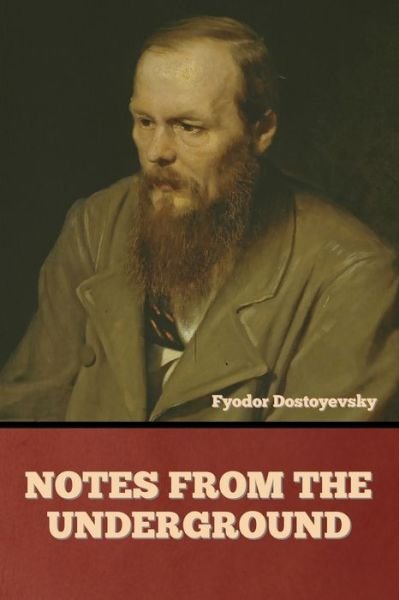
Notes from the Underground: a Classic 1864 Russian Novella Fyodor Dostoyevsky


Notes from the Underground: a Classic 1864 Russian Novella
Fyodor Dostoyevsky
Publisher Marketing: Notes from the Underground - Fyodor Dostoyevsky - CLASSIC RUSSIAN LITERATURE. The author of the diary and the diary itself are, of course, imaginary. Nevertheless it is clear that such persons as the writer of these notes not only may, but positively must, exist in our society, when we consider the circumstances in the midst of which our society is formed. I have tried to expose to the view of the public more distinctly than is commonly done, one of the characters of the recent past. He is one of the representatives of a generation still living. In this fragment, entitled "Underground," this person introduces himself and his views, and, as it were, tries to explain the causes owing to which he has made his appearance and was bound to make his appearance in our midst. In the second fragment there are added the actual notes of this person concerning certain events in his life.--AUTHOR'S NOTE. Notes from Underground, also translated as Notes from the Underground or Letters from the Underworld, is an 1864 novella by Fyodor Dostoyevsky. Notes is considered by many to be the first existentialist novel. It presents itself as an excerpt from the rambling memoirs of a bitter, isolated, unnamed narrator (generally referred to by critics as the Underground Man) who is a retired civil servant living in St. Petersburg. The first part of the story is told in monologue form, or the underground man's diary, and attacks emerging Western philosophy, especially Nikolay Chernyshevsky's What Is to Be Done? The second part of the book is called "Apropos of the Wet Snow," and describes certain events that, it seems, are destroying and sometimes renewing the underground man, who acts as a first person, unreliable narrator." Contributor Bio: Dostoyevsky, Fyodor Fyodor Dostoyevsky was a Russian novelist, short story writer and essayist whose literary works explored human psychology in the troubled political, social, and spiritual context of nineteenth-century Russia. A student of the the Nikolayev Military Engineering Institute, Dostoyevsky initially worked as an engineer, but began translating books to earn extra money. The publication of his first novel, Poor Folk, allowed him to join St. Petersburg s literary circles. A prolific writer, Dostoyevsky is best known for work from the latter part of his career, including the classic novels Crime and Punishment, The Idiot and The Brothers Karamazov. Dostoyevsky s influence extends to authors as diverse as Anton Chekhov, James Joyce, Ernest Hemingway, and Jean-Paul Sartre, among many others. He died in 1881. Contributor Bio: Pevear, Richard Richard Pevear and Larissa Volokhonsky were awarded the PEN/ Book-of-the-Month Translation Prize for "The Brothers Karamazov" and have also translated Dostoevsky's "Crime and Punishment", " Notes from Underground", "Demons", and "The Idiot". Contributor Bio: Volokhonsky, Larissa Richard Pevear and Larissa Volokhonsky were awarded the PEN/ Book-of-the-Month Translation Prize for "The Brothers Karamazov" and have also translated Dostoevsky's "Crime and Punishment", " Notes from Underground", "Demons", and "The Idiot".
| Medios de comunicación | Libros Paperback Book (Libro con tapa blanda y lomo encolado) |
| Publicado | 10 de junio de 2015 |
| ISBN13 | 9781514296349 |
| Editores | Createspace |
| Género | Cultural Region > Russia |
| Páginas | 90 |
| Dimensiones | 178 × 254 × 5 mm · 170 g |
Mas por Fyodor Dostoyevsky
Mostrar todo


![Cover for Fyodor Dostoyevsky · Crime and Punishment - Word Cloud Classics (Paperback Book) [2nd edition] (2025)](https://imusic.b-cdn.net/images/item/original/722/9781667209722.jpg?fyodor-dostoyevsky-2025-crime-and-punishment-word-cloud-classics-paperback-book&class=scaled&v=1730149533)






Ver todo de Fyodor Dostoyevsky ( Ej. Paperback Book , Hardcover Book , Book , CD y CD MP3 )